Seventy-five years ago this week, the world made one of its most important moral and legal commitments.
By Melanie Nathan, July 28, 2026.
Emerging from the devastation of the Second World War, the Refugee Convention was born from one of history’s greatest moral failures. Jewish families fleeing Nazi persecution knocked on the doors of nations that refused to open them. Ships carrying desperate refugees were turned away. Borders closed. Too many people seeking nothing more than safety were sent back toward persecution and, ultimately, death. The 1951 Refugee Convention* was the world’s promise that this failure would never be repeated. It recognized a simple but revolutionary principle: that a human being does not lose their rights simply because they are forced to flee across a border.
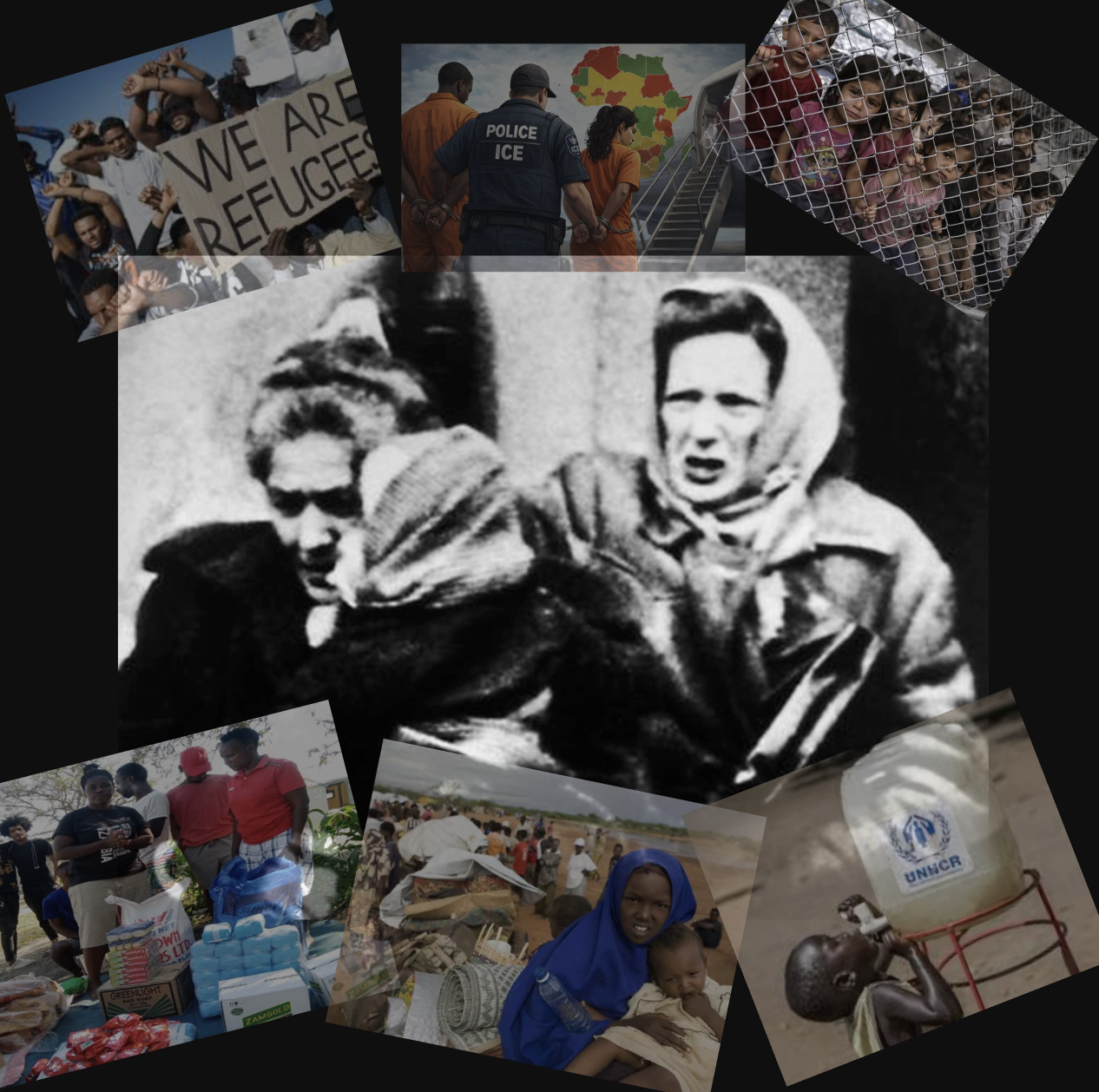 The Convention established something that should never have been controversial—that people escaping persecution are entitled to protection, not punishment. It enshrined rights that many of us now take for granted and placed at its heart the principle of non-refoulement: no one should be returned to a country where they face persecution, torture, or serious harm.
In the United States, the Trump administration has failed the promise miserably, through restrictive immigration and asylum policies, closing of our borders, travel bans, the minimization of the Presidential refugee determination number, the expansion of detention, other barriers to protection, unlawful detention of refugees and asylum seekers, many mid-process, and reductions in humanitarian support which has profoundly affected people seeking refuge.
Refugees are too often treated as security threats rather than human beings fleeing persecution. The policies harbor the very cruelty, family separation, and deadly consequences the Convention sought to change, moving us further from, not closer to, the promise made seventy-five years ago.
I would be remiss if I did not acknowledge this – and I am holding back expressing it angrily: The recent U.S. refugee and asylum policies sit uneasily alongside the spirit of the Refugee Convention. Prioritizing the admission of white Afrikaners while dramatically restricting access to asylum for many others fleeing persecution, particularly people of color from Africa and elsewhere, raises disturbing questions about whether protection is being applied consistently and without discrimination, as the Convention intends.
Seventy-five years later, the PROMISE, is under greater affliction and strain than at any time in recent memory.
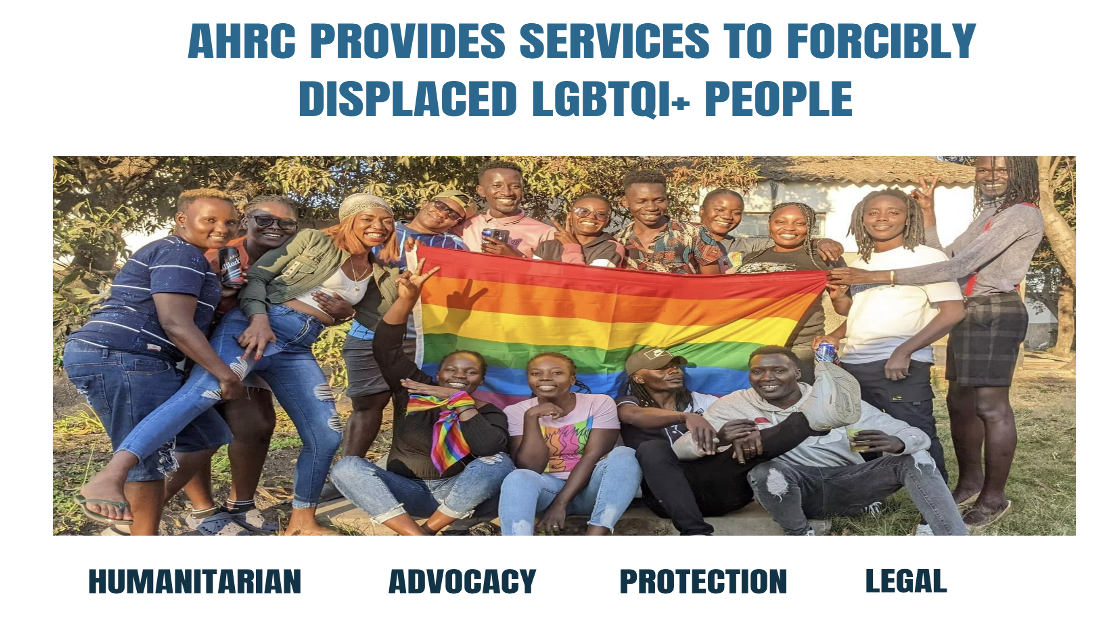
Across parts of Africa, governments that have accepted obligations under the Refugee Convention continue to deny meaningful and safe protection to LGBTQI+ refugees, often engaging in refoulement of people, back to the persecution, torture, and life or death situations from which they had fled. Individuals fleeing persecution because of their sexual orientation or gender identity are too often labelled criminals rather than recognized as refugees. They are excluded from protection, subjected to violence, denied services, arbitrarily detained, or pressured to conceal who they are in order to survive.
Criminalization does not merely punish LGBTQI+ people. It acts as a catalyst for persecution. It licenses discrimination, emboldens violence, and destroys the very protection that the Refugee Convention promises to all people without discrimination.
The Convention does not distinguish between “deserving” and “undeserving” refugees. Its promise belongs to everyone.
In fact, all the world, we are witnessing an erosion of asylum systems through deterrence policies, prolonged detention, accelerated procedures that undermine due process, externalization of refugee responsibilities, shrinking resettlement opportunities, and diminishing humanitarian funding.
At the same time, devastating cuts to humanitarian funding have left UNHCR and its partners struggling to provide food, shelter, healthcare, legal assistance, and protection across the globe. We see the consequences every day in our work with displaced LGBTQI+ refugees throughout Africa. The need has never been greater, while the resources available have rarely been more constrained. To put it bluntly many of our organizations are running out of money and time.
The Refugee Convention is an historical document and it is a living promise for all. Its strength, deeply construed in those words written in 1951, depends further on whether governments choose to honor those words today. While many across the globe continue living with precisely the same fear they thought they had escaped, if “The Promise” is to mean anything at all, it must include all and it must receive the attention it deserves through admissions, resources and funding.
Today, I also want to acknowledge those who continue carrying this burden despite impossible circumstances. The staff of UNHCR, IOM, humanitarian organizations, such as HIAS, IRC, and fellow refugee-led organizations, pro bono lawyers, interpreters, experts, social workers, researchers, advocates, and volunteers perform remarkable work every day, often unseen and increasingly underfunded. Their commitment keeps the promise alive even when governments fall short. But they cannot carry it alone. The Refugee Convention was never intended to be sustained by humanitarian goodwill. It was intended to be honored through political courage and sustained by responsible governments.
On this milestone anniversary, the organization I proudly direct, the African Human Rights Coalition (AHRC), with mostly refugee ‘ambassadors’ at the helm, has called upon:
· Governments across Africa to honor their Refugee Convention obligations equally and without discrimination, ensuring that LGBTQI+ refugees receive the same protection afforded to every other refugee.
· The United States and other donor nations to restore leadership and our honor in refugee protection by pursuing policies that uphold dignity, due process, humane treatment, and meaningful access to asylum.
· The international community to strengthen, not weaken, support for UNHCR and humanitarian organizations through sustained funding, international cooperation, and renewed political commitment.
· Civil society, legal professionals, and advocates to continue defending the principle of non-refoulement and the rule of law whenever they are threatened.
· All Citizens of all Nations – otherwise uninvolved to invoke the adage “there but for the grace of God go I..” and become engaged in outreach through invoking your power as voters and as humanitarians.
Today, more than 117 million people have been forcibly displaced from their homes, the highest number ever recorded. Never has the promise embodied in the 1951 Refugee Convention been more urgently needed, yet never has it come under greater strain. The answer to unprecedented displacement cannot be diminished compassion. It must be renewed solidarity.
On this the seventy-fifth anniversary of The Refugee Convention, let us recommit ourselves to ensuring that protection is never selective, dignity is never conditional, and refuge is never denied because of who someone is or where they come from, and that we will always “welcome the stranger.”
As noted in THE PROMISE “We stand by the promise of the Refugee Convention. We choose action, compassion and solidarity. Until everyone is safe.”
- Convention Relating to the Status of Refugees was adopted on July 28, 1951, by the United Nations Conference of Plenipotentiaries on the Status of Refugees and Stateless Persons. (See)
www.africanHRC.org/donate

