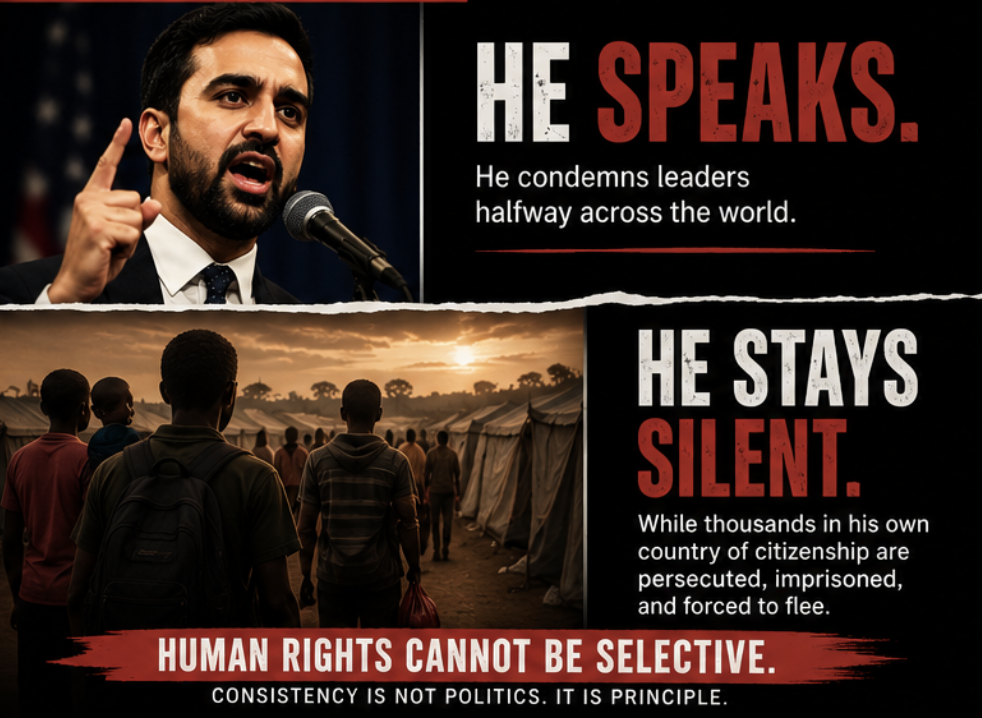
Proof of selective outrage deepens suspicion… See Petition at end.
By Melanie Nathan, July 25, 2026 – First Published here.
When New York City Mayor Zohran Mamdani publicly described Israeli Prime Minister Benjamin Netanyahu as “a war criminal” and “the architect of a horrific genocide against the Palestinian people,” he did far more than voice criticism of a foreign government. From one of the world’s most visible public offices, he presented one of the gravest accusations in international law as settled fact, notwithstanding that allegations of genocide remain fiercely disputed and have not been adjudicated by a competent international court. In doing so, he employed language with profound legal, political, and social consequences, language that carries particular weight in a city home to the largest Jewish population outside Israel.
For the purposes of this discussion, however, I will put aside the incendiary allegations in the Mayor’s choice of words.
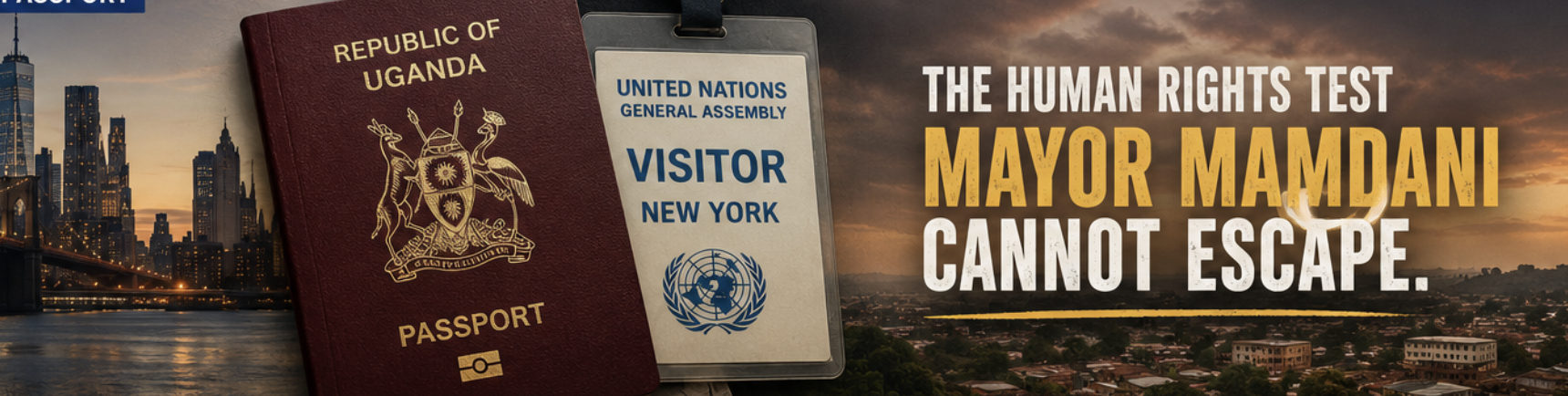
Let us assume that a mayor may invoke the language of universal human rights and international justice when speaking about foreign leaders. If that is the standard Mayor Mamdani wishes to embrace, then the public has the right to universality and consistency.
The moment a public official chooses to wield the language of universal justice against one foreign leader, he invites an equally legitimate question:
Will he apply those same principles consistently?
Just days after Mayor Mamdani’s latest denunciation of Israel, a man allegedly shouting “Allahu Akbar” stabbed two people on Manhattan’s Upper West Side, including a visibly Jewish New Yorker. Investigators will determine motive. It would be irresponsible to claim that the Mayor’s remarks caused this horrific attack. And it would be equally irresponsible to pretend that words spoken by political leaders exist in a vacuum.
Public officials shape public discourse. They influence the moral atmosphere of a city. They determine who is portrayed as victim, who is portrayed as villain, and which communities feel increasingly isolated or singled out. In a city home to the largest Jewish population outside Israel, that responsibility carries extraordinary weight.
Because while Mayor Mamdani has shown no hesitation in condemning the government of Israel, there is another government, one to which he has a far closer personal connection, about which his silence has become impossible to ignore.
Uganda.
Mayor Mamdani is a citizen of Uganda.
He has celebrated family milestones there, including his own lavish wedding in July 2025. Not so long ago! He has publicly appeared alongside Rebecca Kadaga, one of the principal architects of Uganda’s Anti-Homosexuality Act, otherwise known as “The Kill the Gays Bill”. When questions were raised about that appearance, he explained that he had not understood Kadaga’s role. Many accepted that explanation at face value. I did not. My numerous articles speak to that – if you would like to take a peak.
But today there is no ambiguity. He now knows.
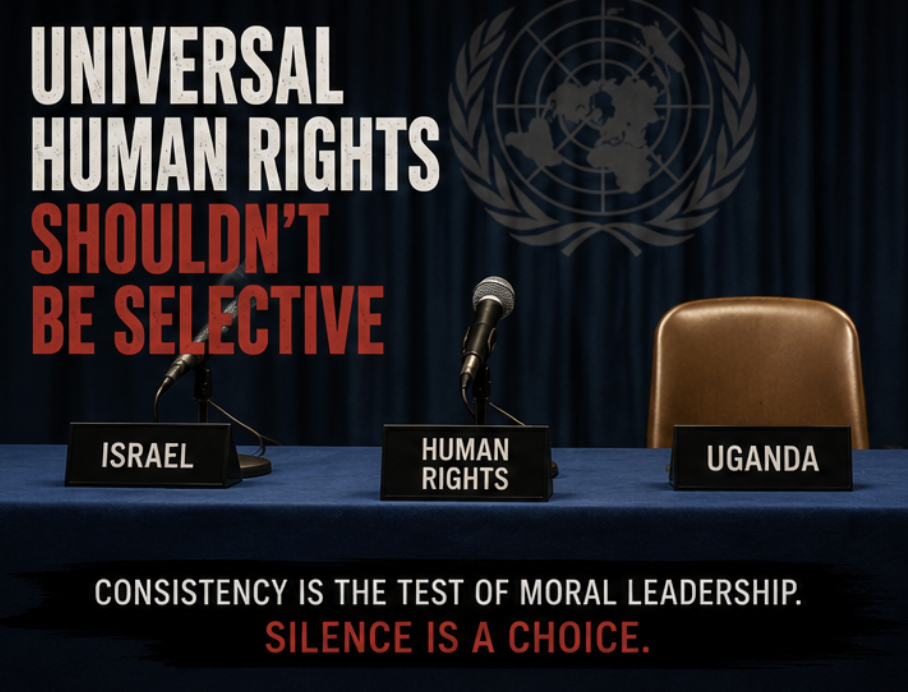 He knows that Uganda’s Anti-Homosexuality Act imposes life imprisonment and, in certain circumstances, the death penalty for consensual same-sex relationships. He knows it has fueled violence, arbitrary arrests, blackmail, forced displacement, family rejection, and exile with dangerous pathways, causing loss of life. He knows that thousands of LGBTQI Ugandans have fled their homes seeking refuge from a law that has become synonymous with state-sanctioned persecution. He knows a good number of these asylees and refugees are now in New York City.
For more than fifteen years, I have documented these abuses. As Executive Director of the African Human Rights Coalition, I have worked directly with LGBTQ Ugandans forced to flee their country. I have authored expert reports for courts across the United States, Canada, the United Kingdom, and Europe. I have witnessed this crisis unfold not through headlines or political debate, but through the lived experiences of survivors.
As I write these words, hundreds remain in hiding—living in constant fear, hunted because of who they are, reminiscent of the hidden lives Anne Frank so tragically came to symbolize. Many struggle simply to find food, secure shelter, and escape to safety. Others remain stranded in neighboring African countries that refuse to recognize their refugee claims because those governments, too, criminalize homosexuality and view them not as refugees, but as criminals.
When President Yoweri Museveni signed Uganda’s Anti-Homosexuality Act into law in 2023, he called upon African leaders to “save the world from homosexuality.” Many have answered that call through similar legislation or increasingly hostile policies. The impact of Uganda’s campaign against LGBTQ people has extended far beyond its borders, helping fuel one of the most significant human rights crises facing LGBTQ Africans today.
I have also publicly called upon Mayor Mamdani to condemn Uganda’s Anti-Homosexuality Act and to call for its repeal. He has remained silent.
That silence is no longer merely disappointing; it is deeply troubling. When a public official so readily invokes the language of international justice to condemn one foreign leader, yet refuses to speak against one of the world’s most notorious campaigns of state-sponsored persecution carried out by the government of the country of which he is a citizen, the silence inevitably raises difficult questions. It projects a selective moral outrage that risks appearing as indifference toward the suffering of LGBTQ Ugandans.
Nor is this solely about the persecution of LGBTQ people. Uganda’s broader human rights record has long been condemned for the suppression of political opposition, arbitrary detention, torture, restrictions on freedom of expression and assembly, and other serious abuses. These are not allegations confined to advocacy organizations; they have been documented repeatedly by governments, including the United States, and by international human rights bodies. Yet Mayor Mamdani has remained publicly silent about this broader pattern of repression as well.
Uganda’s persecution of LGBTQ people is not an abstract geopolitical dispute unfolding thousands of miles away. It is one of the most severe and enduring human rights crises in the world today. It is also a crisis directly connected to the country of which Mayor Mamdani remains a citizen.
If there is one foreign government over which Mayor Mamdani possesses unique moral credibility—and, arguably, a unique moral responsibility—it is not Israel.
It is Uganda.
Yet while he readily labels Israel’s leaders as international criminals, he has not summoned that same moral clarity for President Yoweri Museveni, a 40+ year dictator, and his government.
Where is the condemnation of a regime that has criminalized love?
Where is the demand that Uganda repeal the Anti-Homosexuality Act?
Where is the outrage over the imprisonment, torture, disappearances, and persecution that continue under Museveni’s rule?
Where is the solidarity with the thousands of LGBTQ refugees scattered across Africa because returning home could cost them their freedom, or their lives?
These are not rhetorical questions. And they reside in the context of Mamdani claiming love and support for THE GAYS in new York City through a myriad of measures. That does not alter or cure his silence – rather it exacerbates it!
These questions go to the heart of whether human rights are truly universal, or merely political.
Soon, representatives of President Museveni’s government will once again arrive in New York for the United Nations General Assembly. Mayor Mamdani has argued that New York should not provide impunity to foreign leaders accused of grave human rights abuses. If that principle is genuine, then surely it cannot stop at Israel’s borders.
Will he publicly condemn Museveni’s government? Will he call for repeal of Uganda’s Anti-Homosexuality Act? Will he stand with the LGBTQI Ugandans forced into exile by policies enacted by officials whose government he has never publicly challenged?
Or does his commitment to international justice extend only to governments that fit a particular political narrative or serve an agenda that is becoming increasingly more obvious?
This is not a demand that Mayor Mamdani change his views on Israel – we know that is a fruitless endeavor. We know he thinks Israel should not exist as the home of the Jewish people. It is a demand that he apply the same moral standards everywhere. Universal human rights cannot survive selective outrage.
When political leaders elevate one set of victims while ignoring another, they transform human rights from universal principles into ideological instruments. The victims become secondary to the politics. To me , that is insidious and the opposite of justice. When we witness such selectivity, we are of right to invoke motive, and to tout it as fact, beyond assumption!
Mayor Mamdani often speaks of creating a city where every community feels safe and valued. I believe that aspiration should include Jewish New Yorkers, LGBTQI Ugandans, political prisoners, and every victim of state persecution, without regard to whether their suffering advances a preferred political cause.
The true measure of human rights advocacy is not how passionately one condemns distant governments. It is whether one possesses the moral courage to confront injustice even when it is politically inconvenient, financially inconvenient, and especially when it is committed by one’s own country of citizenship.
So now that Mayor Mamdani has flagrantly shown us that he is willing to judge foreign leaders through the lens of international human rights, it is time to ask him to do the same with Uganda.
Until he does, his vision of universal justice will remain incomplete, not because he spoke about Israel, but because he chose silence where his own voice could matter most. Until he applies the same standards to Uganda, his selective outrage can only deepen suspicion that his invocation of human rights serves less as a universal principle than as a vehicle for a singular political campaign against Israel.
Author’s Note:
If this selective application of human rights concerns you, I invite you to add your voice to ours by signing my public petition calling upon Mayor Zohran Mamdani to unequivocally condemn Uganda’s Anti-Homosexuality Act and publicly call for its repeal, while also addressing the broader human rights abuses committed under President Yoweri Museveni’s government.
The petition began during Mayor Mamdani’s campaign and has now garnered more than 6,500 signatures. In the coming week, it will be formally delivered to Mayor Mamdani at New York City Hall. His press office has already been notified of our concerns and given the opportunity to respond. To date, we have received no response.
Silence is a choice. If you believe that human rights should be defended consistently, regardless of politics, geography, or ideology, I hope you will stand with us.
Link to the Petition here.
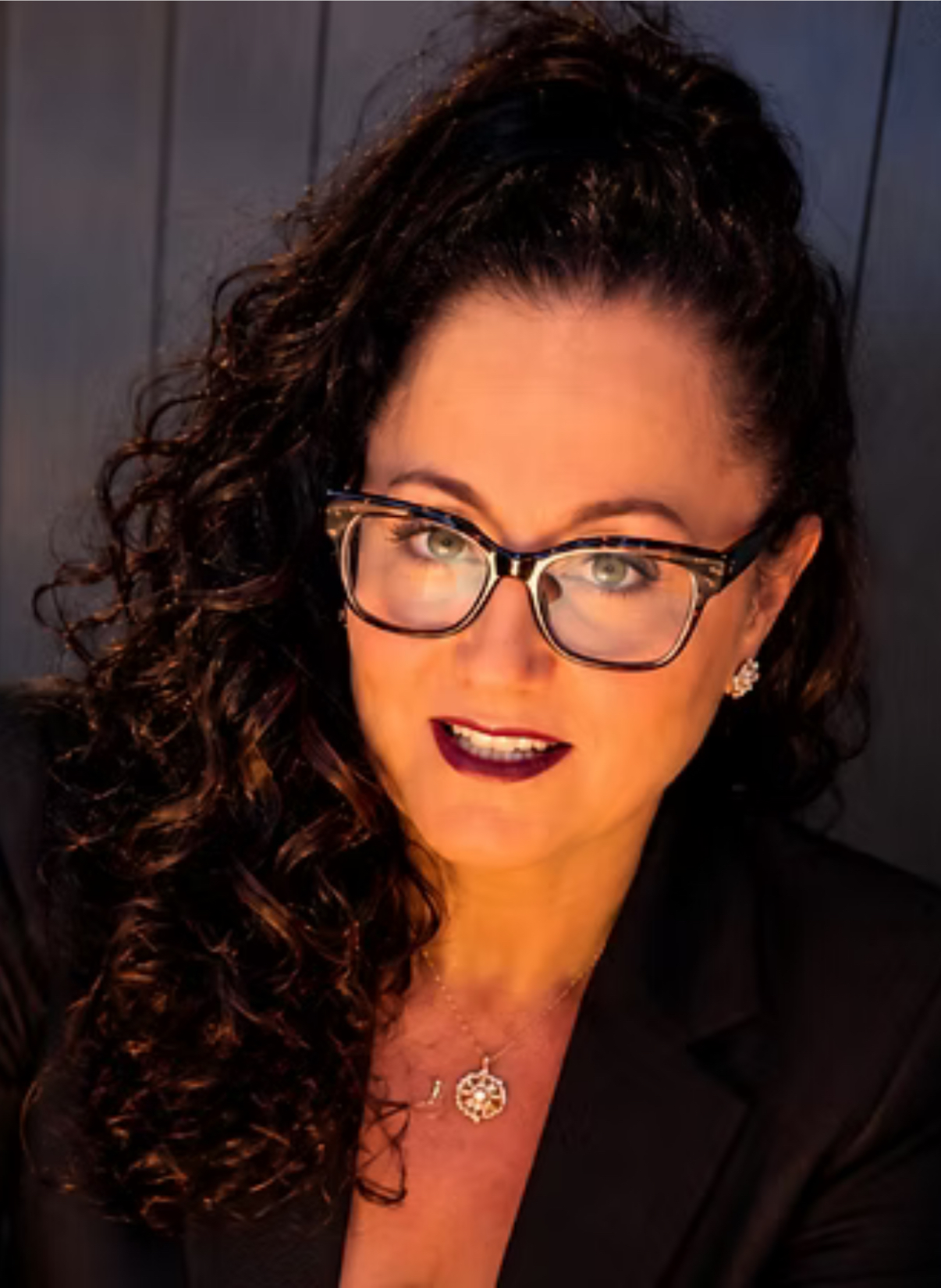 About the Author: Melanie Nathan is Executive Director of the African Human Rights Coalition (AHRC), an international human rights organization dedicated to protecting LGBTQI+ people fleeing persecution across Africa. Through emergency humanitarian aid, legal advocacy, expert testimony, refugee protection, and international policy work, AHRC assists individuals escaping imprisonment, violence, torture, and discrimination while documenting human rights abuses and advocating for justice before governments, courts, and international institutions. Donations can be made here.