By Melanie Nathan, July 23, 2026 (First published at this link: https://substack.com/home/post/p-207453006.)
Long before Hamas’ massacre shattered Israel, there was another moment when activists faced a profound moral choice: whether to condemn the deliberate murder of Jewish civilians, or to celebrate someone convicted of participating in it.
On a Friday afternoon in February 1969, as Jerusalem prepared for Shabbat, shoppers crowded into the Supersol supermarket. Families were buying challah, wine, and the last necessities before sunset. Hidden among the bustle and the swelling anticipation of Shabbat was a bomb.
When it exploded, two young Hebrew University students, Edward Joffe, 22 and Leon Kanner, 21, were killed. Eight others were wounded. The attack was intended to kill many more.
Those responsible were apprehended, convicted, and sentenced. For the victims’ families and the injured, there could be no justice to restore what had been taken, nor any enough to soothe the grief, but at least the truth of what had happened and who had committed the heinous deed, was not in dispute.
Nearly half a century later, however, that story would be rewritten, not in the Middle East, but in an American courtroom.
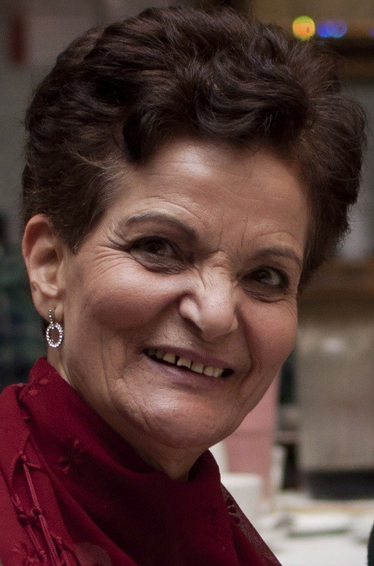
One of the convicted perpetrators, Rasmea Odeh immigrated to the United States after serving approximately ten years of her life sentence, before being released in a prisoner exchange in Israel. Yes, – a prisoner exchange. When she later applied for permanent residency and U.S. citizenship, she lied by stating she had never been arrested, convicted, or imprisoned.
Federal prosecutors charged her with immigration fraud based on those false statements. Odeh argued that torture she allegedly endured during Israeli interrogation contributed to her failure to disclose her conviction. After years of litigation, she ultimately admitted that she had knowingly made false statements on her immigration applications, relinquished her U.S. citizenship, and departed the United States.
But Rasmea Odeh’s case was never simply about immigration fraud or a decades-old terrorism conviction. It became a defining test of moral judgment.
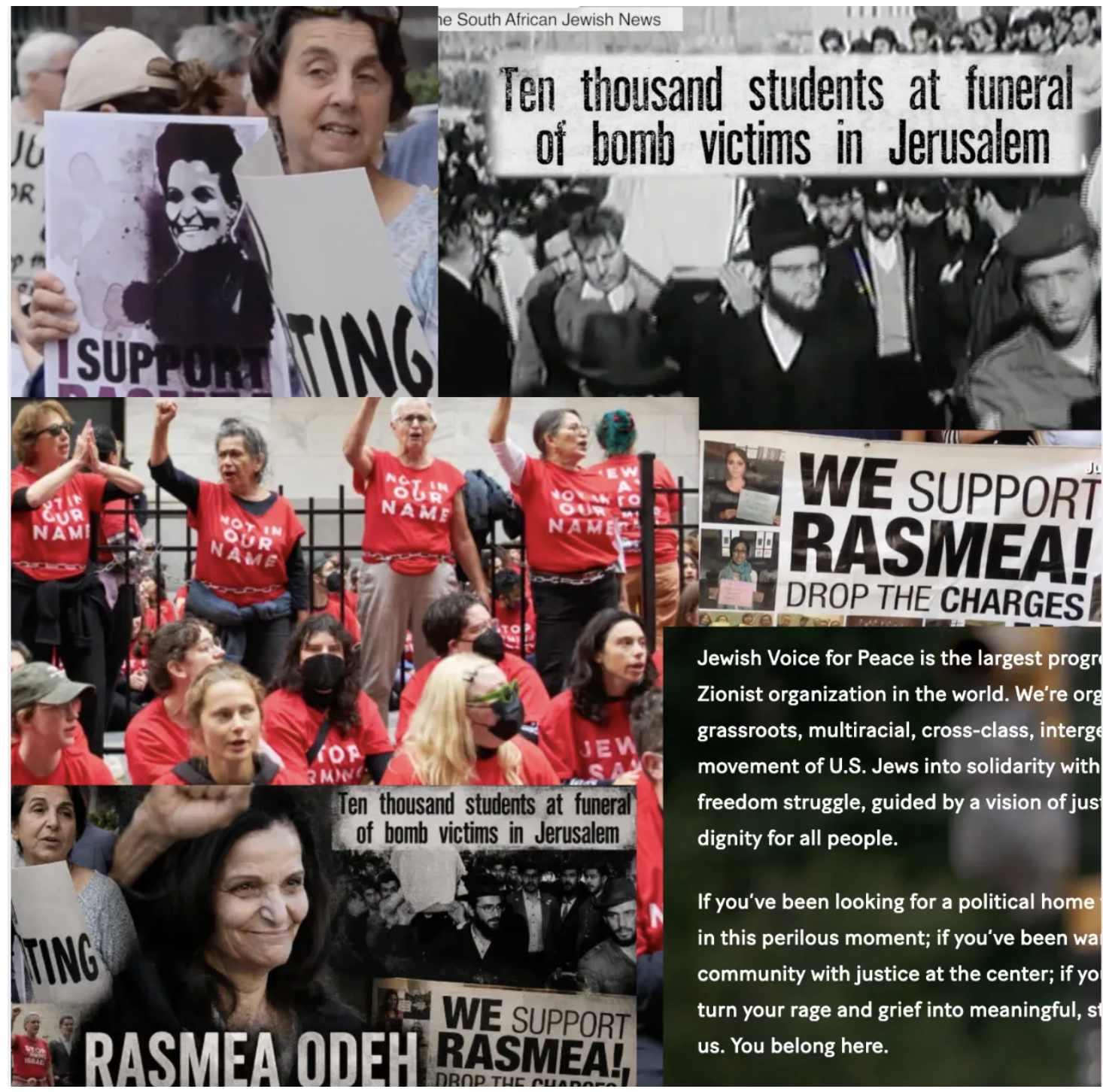
Organizations such as Jewish Voice for Peace (JVP)* became her most visible champions. They did not merely advocate that Odeh deserved due process or that allegations of torture should receive careful consideration. Instead, they elevated her into a celebrated symbol of resistance, portraying her as a feminist icon and victim of oppression, fully supporting her quest to avoid her consequences, and all the while giving comparatively little, if any attention to the civilians, college students Eddie and Leo, killed in the bombing, or to the families who had lived with that devastating loss for decades. Sound familiar?
Looking back from the perspective of October 7, that decision deserves renewed scrutiny.
At the time, many dismissed the Odeh campaign as an isolated controversy, an unfortunate excess of activist politics. It was neither. It revealed an emerging moral framework in which violence against Israeli civilians could be subordinated to a broader narrative of anti-colonial resistance. An opportunity to advance antizionist narratives. Instead the individual victims and the horror of terrorism was cast aside for a political symbolism that became primary. And so JVP built its membership. It had a hero.
Rasmeah Odeh was the prototype. After October 7, that framework no longer occupied the margins.
Across much of the movement surrounding Jewish Voice for Peace and allied organizations, the same hierarchy of moral inversion reappeared. The massacre itself was swiftly contextualized before it was unequivocally condemned, if ever. Israeli civilians became abstractions. Hamas was discussed less as the perpetrator of one of the deadliest most barbaric attacks on Jews since the Holocaust than as the predictable product of history and what they termed occupation.
Once again, the victims were disappearing behind the political narrative. Hostage posters were torn down. Feminists denied rapes. Hamas was Rasmea Odeh.
This is why the Rasmea Odeh campaign must be remembered, not simply as a legal case, nor only as an early warning of the moral distortion that would become impossible to ignore after October 7, but as a blueprint for consequences that continue to unfold before our eyes. Or, if you’ll forgive a touch of facetiousness: the campaign has yet to take its final bow, and even then it will still need a curtain!
The further significance of the Rasmea Odeh campaign raises a larger question: what kind of moral education has Jewish Voice for Peace been offering the next generation of Jewish activists?
Many young Jews encountering JVP after October 7 understandably viewed its messaging as a reaction to a single war. They saw passionate slogans, social media campaigns, campus demonstrations, and appeals framed in the language of justice, liberation, and human rights, albeit selective. Many had no reason to know that this was an insidious strategy cultivated as a moral framework, for years. Many continue to avail themselves as tools of a decades long revisionist project.
The Rasmea Odeh campaign demonstrates that October 7 did not create this framework – it revealed it.
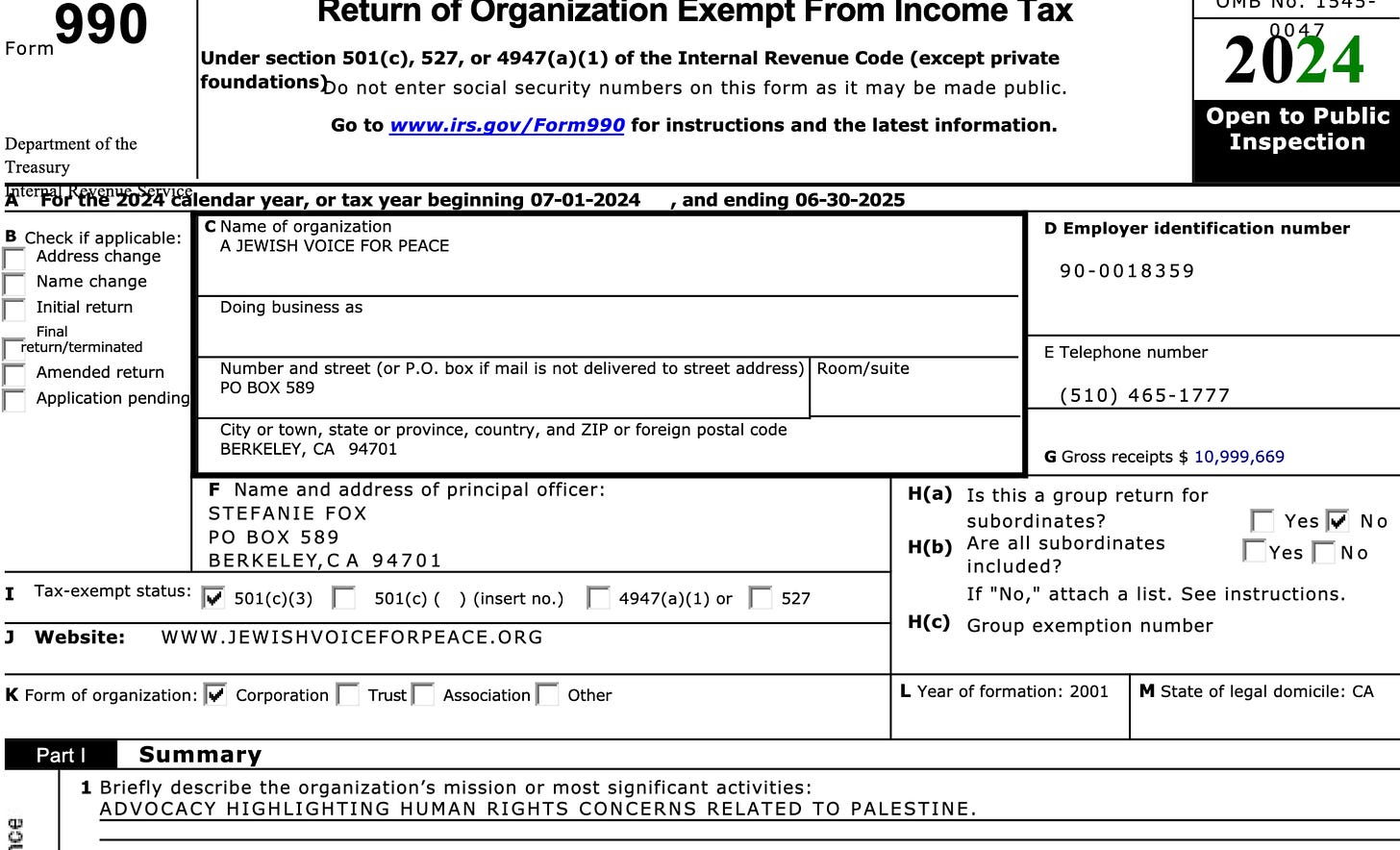
Indeed at the risk of repetition, years before Hamas murdered, raped, kidnapped, and terrorized Israeli civilians, JVP had already embraced a model in which the moral status of violence against Israelis could become secondary to the political symbolism of the person associated with it. The victims faded into the background. The perpetrators were recast as icons of resistance. That inversion did not begin on October 7. It had already been rehearsed. It continued to serve the justification for the words we are “antizionist” emblazoned on JVP’s website, the building of a membership of over 750,000 people, and annual revenue that jumped from around $3 million in 2022 to over $10,000,000.00 (2024’s 990) per annum. (See screenshots below)
This is why history matters:
College students and young Jews deserve to know that the narratives presented to them today did not emerge overnight. They are part of a longer ideological tradition that repeatedly asks them to reinterpret violence against Israeli civilians through a political lens (skewed to advance a particular agenda), rather than first through a human one.
Every generation has the right to challenge governments, criticize Israeli policy, advocate for Palestinian rights, and oppose war. Those debates are legitimate and necessary in any democracy. But there is a moral line between criticizing a state and elevating terrorist extremists convicted of attacks on civilians into symbols of admiration. There is a deeply gorged triple red line that separates savage criminality from legitimate resistance.
When organizations repeatedly blur those lines, they do more than advance a political position. They reshape the moral instincts of those who follow them.
That is why the story of Rasmea Odeh should not remain buried in the archives of 2016. It should be taught, discussed, and remembered not because it tells us only about one woman, but because it helps explain an immoral ideological architecture that many failed to recognize until after October 7.
If the October 7 reaction by JVP and those with similar antics, continues to bewilder or shock you, ask yourself why that moral decay felt so sudden. The answer may be that it wasn’t sudden at all. Some groups had been preparing the intellectual and immoral groundwork for years. Rasmea Odeh was a prototype.
History cannot be changed. But history can be recognized for what it is. Awareness can be the first act of prevention. If we open our eyes to the performance perpetrated by the JVP’s in this world, perhaps we will be better prepared to stand in the way of moral rot the next time it starts its fester.
 Afterword:
A Call to Read Before You Rally
If you wear a Jewish Voice for Peace T-shirt, donate to the organization, encourage your children to join its campus chapters, or share its messaging online, I ask only one thing:
Read the story of Rasmea Odeh first.
Read JVP’s own statements. Read how it portrayed her. Read what it chose to emphasize—and what it left out. Then decide whether this is the moral voice you wish to represent.
Organizations should be judged not only by what they say after a crisis, but by the values they have consistently demonstrated over time.
If, after learning about the Rasmea Odeh campaign, you are still comfortable lending JVP your name, your money, or your credibility, that is your decision.
But let it be an informed one.
In Memoriam:
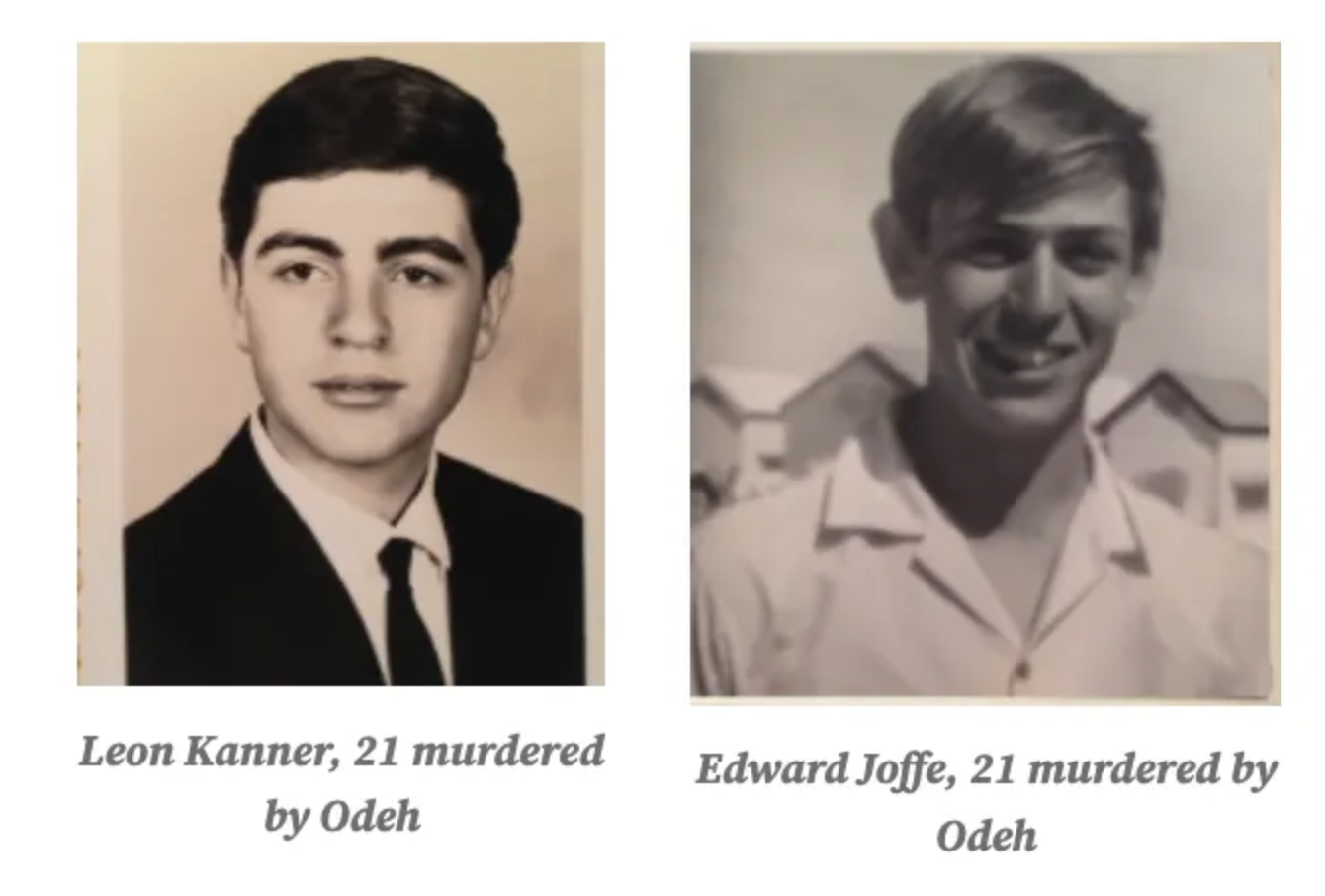
College student Edward (”Eddie”) Joffe , 22 years old, originally from South Africa and had recently immigrated to Israel with his family.
College student Leon Kanner (Kaner), 21 years old according to contemporaneous reporting and most historical accounts, had recently immigrated from Uruguay and was studying agriculture at the Hebrew University
May their memories be a blessing.
NOTES :
List of Organizations associated with supporting Odeh’s case:
*Jewish Voice for Peace (JVP) — issued public statements, organized support, and presented Odeh as a respected community leader and victim of injustice.
Arab American Action Network — Odeh served as Associate Director there. The organization became the institutional center of her defense campaign and public advocacy.
US Palestinian Community Network (USPCN) — co-founded by Odeh after her deportation and continued to feature her as a speaker and leader.
Center for Constitutional Rights (CCR) — signed and publicized coalition statements opposing her prosecution, along with dozens of other organizations.
National Students for Justice in Palestine — among the organizations signing coalition statements supporting Odeh.
Critical Ethnic Studies Association — issued a statement supporting Odeh and characterizing her prosecution as political.:
TAX RETURNS 990 – FOR JVP:
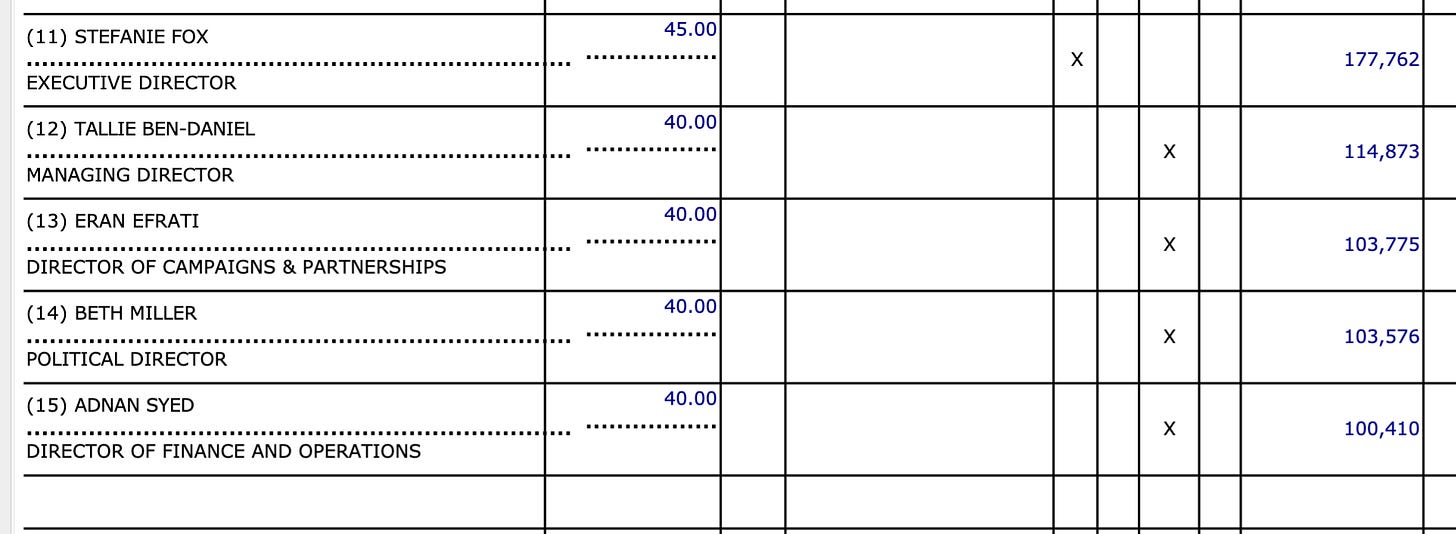
What is difficult to understand from the 990’s is how the expense line “salaries” is actually expended. Im no accountant – but I can read that the named staff / executives receive a total $650,000 (approx) leaving well over $4,000,000 of the $5,700,000 line item unnamed. Also as can be seen from the screenshot below JVP’s revenues jumped from $2-$3million per annum to over $10,000,000 the year October 07 happened. But funding is not what this article is about – though interestingly the development and realization of the blueprint I speak of seems to have been a lucrative endeavor, exploding membership and revenues. There is much more to dissect – but that is for another time.



I plan to send this article to the JVP RABBINICAL COUNCIL members who are listed on their website, as follows –
in the hope of a statement in response to this article from each. I will report back!
Rabbi Leora Abelson
Rabbi Rebecca Alpert
Rabbi Esther Azar
Rabbi Lev Baesh
Rabbi David Basior
Rabbi Meryl Crean
Rabbi Eli DeWitt
Rabbi Art Donsky
Rabbi Michael Feinberg
Rabbi Shai Gluskin
Rabbi Borukh Goldberg
Rabbi Lynn Gottlieb
Rabbi Julie Greenberg
Rabbi Gregory Hersh
Rabbi Linda Holtzman
Rabbi Andy Kahn
Rabbi Ariana Katz
Rabbi Rachel Kipnes
Rabbi Edward Klein
Rabbi Elliot Rose Kukla
Rabbi Lonnie Kleinman
Rabbi Alan LaPayover
Rabbi Mordechai Liebling
Rabbi Kris McDaniel-Miccio
Rabbi Jeremy Milgrom
Rabbi David Mivasair
Rabbi Alexis Pearce
Rabbi Lucia Pizarro
Rabbi Michael Ramberg
Rabbi Brant Rosen
Rabbi Jessica Rosenberg
Rabbi Ken Rosenstein
Rabbi Jeffrey Roth
Rabbi Joshua Saltzman
Rabbi Abby Chava Stein
Rabbi Brian Walt
Rabbi Alissa Wise
Rabbi May Ye
Rabbi Cat Zavis
Student Rabbi Rinat Abastado
Student Rabbi Jacob Berman
Student Rabbi Josie Felt
Student Rabbi Dr. Elya Piazza
Student Rabbi Louisa Solomon
Student Rabbi Jay Stanton

