Imagine the day you make it to safe shores – you are settling into the first semblance of freedom and safety after years of fear and flight! Only to find you may be relegated to square one….
October 13, 2025 – first published at AHRC.
The African Human Rights Coalition (AHRC) strongly condemns the Trump administration’s latest assault on refugee protections, announced through a new Department of Homeland Security (DHS) rule that dramatically reduces the time available for refugees to defend themselves against the termination of their lawful refugee status.
The new rule reduces the response period from 30 days to just 10 days following a Notice of Intent to Terminate refugee status. It is another deeply troubling development in an increasingly hostile immigration environment, one in which refugees who have already been admitted to the United States through established legal processes may face renewed uncertainty, detention, and the possibility of removal.
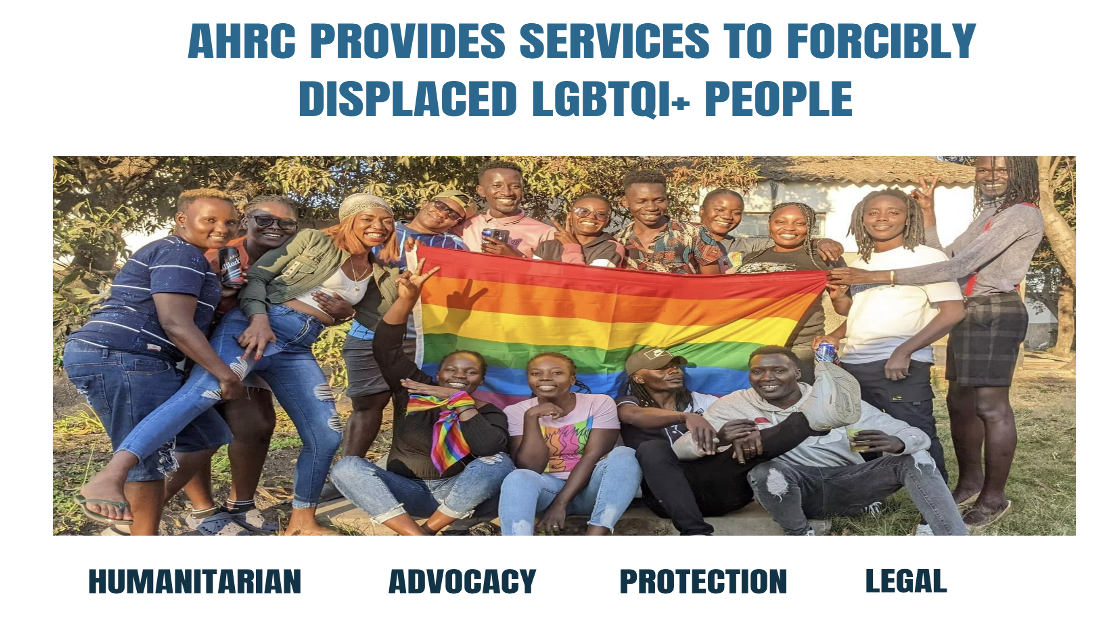 For LGBTQI+ refugees, particularly those fleeing countries where sexual orientation and gender identity are criminalized or where persecution is widespread, the consequences may be catastrophic.
These are people who have already fled persecution. They should not have to live in fear of being returned to it by the very country that offered them protection.
A Particular Danger for LGBTQI+ Refugees:
AHRC works with LGBTQI+ refugees and asylum seekers from African countries where individuals face criminal prosecution, arbitrary arrest, mob violence, family and community persecution, sexual assault, torture, other serious human rights violations, and even killings, because of their actual or perceived sexual orientation or gender identity.
For many, reaching a country of refuge follows years of hiding, repeated displacement, separation from loved ones, and extraordinary efforts to escape life-threatening circumstances, including flight to foreign hostile host countries where they seek protection and resettlement. Resettlement to countries like the U.S. takes years and years of extreme vetting, while living under extremely dangerous and harsh survival conditions.
Admission through the United States Refugee Admissions Program is not an informal arrangement. It follows a federal process involving eligibility determinations, interviews, security screening, and other vetting requirements.
The administration’s new rule places already vulnerable people under the shadow of an accelerated procedure that may jeopardize the very protection they already obtained – and struggled to obtain.
A ten-day response period is particularly alarming for refugees who face language barriers, lack financial resources, have limited access to immigration attorneys, or must obtain evidence from countries where documenting LGBTQI+ persecution is exceptionally difficult and dangerous.
Statement by Melanie Nathan, Executive Director, AHRC:
“I have spent years working with LGBTQI+ refugees who have survived extraordinary persecution, including imprisonment, sexual violence, torture, family rejection, and threats to their lives. I know what it takes for many of these individuals simply to reach a place where they can finally sleep without fear.
“What the Trump administration is doing is unconscionable and unjust. It is taking people who have already endured the trauma of displacement, who have passed through the United States’ own refugee admission procedures, and placing their hard-won security at risk through an accelerated process that may deny them a meaningful opportunity to defend themselves.
“Ten days is not a meaningful opportunity for many vulnerable refugees to find legal representation, gather evidence, obtain translations, and respond to a government seeking to terminate their protection. For an LGBTQI+ refugee whose life may depend upon evidence from a country that criminalizes their identity, the obstacles are even greater.
“And we must be absolutely clear about what is at stake. Deportation is not simply a change of address. For some LGBTQI+ refugees, it can mean being delivered back into the hands of their persecutors, or transferred to another country where they face imprisonment, violence, torture, and the possibility of further forced return.
“The United States cannot claim to be a country of refuge while systematically dismantling the security that refuge is supposed to provide. Protection must mean more than a temporary reprieve from persecution. It must mean that human lives are not treated as expendable in the pursuit of a political agenda.
What compounds this horror is the profound betrayal of trust. The United States agreed to admit these refugees, subjected them to extensive vetting, approved their resettlement, and offered them the prospect of rebuilding their lives in safety. Now, after they have uprooted their lives and placed their futures in America’s hands, the government is effectively saying, “We have changed our minds.”
What makes this particularly cruel is that some of these refugees might otherwise have pursued resettlement in Canada or another country willing to offer them lasting protection. They made decisions based on the commitments of the United States, potentially foregoing other opportunities that may no longer exist, such as resettlement to Canada or another country. You cannot give people refuge, allow them to build their lives around that promise, and then treat their safety as though it were a commitment the government can casually withdraw. These are human lives, not provisional arrangements to be discarded with a change of administration. “
Refugee Protection Cannot Be Reduced to an Administrative Deadline
AHRC recognizes that governments have legitimate responsibilities to examine immigration eligibility if there are particular substantiated fraud or security concerns. Those responsibilities, however, must be exercised consistently with due process, individualized assessment, and obligations not to return people to persecution or torture.
The new rule also sits within a broader enforcement framework that permits the government, in certain circumstances, to initiate removal proceedings against individuals admitted as refugees without first formally terminating refugee status.
For LGBTQI+ refugees, AHRC is particularly concerned that accelerated proceedings may fail to adequately consider evolving country conditions, risks arising from disclosure of sexual orientation or gender identity, and the danger of removal to third countries where meaningful protection may not exist.
A refugee’s circumstances cannot be fairly assessed through an administrative timetable that disregards the complexity of persecution.
AHRC Calls for Protection, Not Renewed Persecution:
The African Human Rights Coalition calls upon the Department of Homeland Security to withdraw the accelerated termination provisions, restore a meaningful opportunity to respond, and ensure access to legal representation and individualized protection assessments before any action that could expose refugees to removal. On a broader note we ask that only cases of substantiated suspected fraud be called into question.
We further call upon lawmakers, legal advocates, refugee protection organizations, and the international human rights community to challenge policies that undermine the integrity of refugee protection.
The United States has long represented the possibility of a new beginning for people fleeing persecution and violence. That promise is gravely diminished when refugees who have followed the lawful pathways established by the United States government must once again fear the loss of their safety.
For LGBTQI+ refugees, protection is often the difference between freedom and imprisonment, between safety and torture, and sometimes between life and death.
AHRC will continue to advocate for the dignity, security, and fundamental human rights of LGBTQI+ refugees and asylum seekers, and against policies that threaten to return vulnerable people to persecution.

