Niger has adopted a new Penal Code that, for the first time in the country’s history, explicitly criminalizes consensual same-sex relations. The legislation introduces severe penalties, including prison terms of up to twenty years for certain offenses related to same-sex relationships, marriage, and association.
Enacted under military rule, the legislation represents a significant escalation in the criminalization of LGBTQI+ people and reflects a broader regional trend in which several West African states have recently enacted new anti-LGBTQI+ laws or strengthened existing legislation.
According to judicial sources citing official legislative documentation, the new law prohibits consensual sexual relations between persons of the same sex and provides penalties of five to ten years’ imprisonment, together with fines of up to 100 million CFA francs (approximately USD $170,000). The financial penalty is extraordinary when viewed against Niger’s socioeconomic conditions. Niger remains among the poorest countries in the world, with a GDP per capita of approximately USD $735 in 2024.
A fine of this magnitude exceeds more than two hundred years of average annual income and is therefore effectively unattainable for the overwhelming majority of Nigeriens. As a practical matter, such a penalty creates a risk of prolonged incarceration, indebtedness, or other severe consequences for those unable to satisfy the financial sanction.
The legislation imposes even harsher penalties for additional offenses created by the new code. Entering into, facilitating, or participating in a marriage involving a same-sex partner is punishable by ten to twenty years’ imprisonment. The same penalty applies to any person who manages, directs, finances, supports, or participates in organizations, clubs, societies, or associations deemed to be homosexual or LGBTQIA+ in nature.
The text further criminalizes any person who “engages or attempts to engage in sexual relations with a person of the same sex” and contains references to so-called intersex and asexual practices. The precise scope and intended application of these provisions remain unclear at the time of writing, raising serious concerns regarding overbreadth, arbitrary enforcement, and legal uncertainty.
Prior to this reform, Niger did not explicitly criminalize consensual same-sex relations between adults. The former Penal Code, inherited from the colonial period, criminalized certain same-sex sexual acts only where they involved a person under the age of twenty-one. As a result, Niger was historically regarded as one of the few countries in West Africa that did not expressly prohibit consensual same-sex relations between adults.
Nevertheless, despite the absence of formal criminalization, LGBTQI+ people in Niger have long faced profound social stigma, discrimination, and exclusion. Reports have documented harassment, threats, family rejection, community violence, and mob attacks targeting individuals perceived to be LGBTQI+. State authorities have frequently failed to provide effective protection, while perpetrators of anti-LGBTQI+ violence have often acted with impunity.
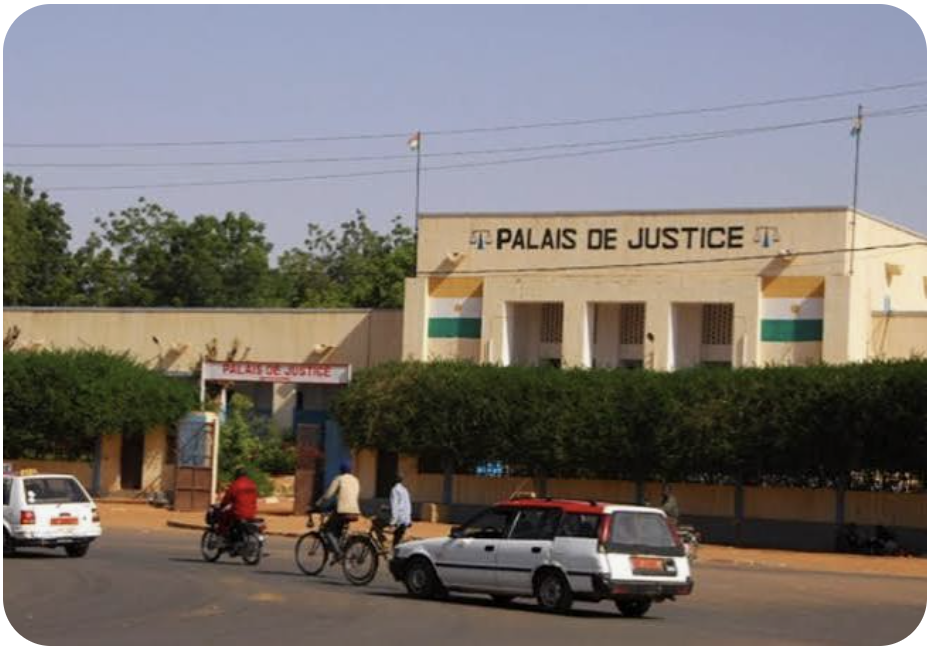 The introduction of explicit criminal penalties is therefore likely to exacerbate existing patterns of discrimination and abuse. Criminalization serves not merely as a legal prohibition but as a powerful social signal that legitimizes hostility toward LGBTQI+ people. In this respect, the new law is likely to function as a catalyst for increased discrimination, harassment, extortion, arbitrary detention, and violence by both state and non-state actors.
The legislative crackdown is a process that began under the civilian administration of President Mohamed Bazoum, who was overthrown in July 2023.
The proposed legislation had been supported by influential Muslim organizations and political figures who invoked religious and cultural values in advocating for criminalization. Following the military coup, the law was ultimately promulgated by the authorities led by General Abdourahamane Tiani, whose government has increasingly embraced a nationalist and anti-Western political orientation and has publicly criticized what it characterizes as the imposition of foreign values.
Melanie Nathan, Executive Director of the African Human Rights Coalition: AHRC strongly condemns Niger’s adoption of a new Penal Code that criminalizes consensual same-sex relations and imposes penalties of up to twenty years’ imprisonment for individuals accused of organizing, financing, or participating in LGBTQIA+ associations:
This legislation places Niger among the most punitive jurisdictions in West Africa and represents yet another alarming step in a regional pattern of escalating state-sponsored persecution of LGBTQI+ people. The timing is particularly troubling. Just days after the so-called African Inter-Parliamentary Conference on Family Values and Sovereignty convened in Ghana, another African nation has embraced a sweeping expansion of criminalization. Niger now joins Burkina Faso, Mali, Senegal, Nigeria, and Ghana in a growing bloc of states that have either enacted new anti-LGBTQI+ laws or intensified existing penalties in recent years. Lest we fail to mention a similar rise in east African countries such as Uganda and Kenya. What is being presented as a defense of “family values” is, in reality, becoming a coordinated assault on fundamental human rights, freedom of association, dignity, and personal autonomy.
AHRC is deeply concerned that this latest development reflects the growing influence of a regional anti-LGBTQI+ political movement that has increasingly sought to portray sexual and gender minorities as threats to African society. Statements by leaders such as President Yoweri Museveni, who has repeatedly called upon African nations to “save the world” from homosexuality, appear to be finding legislative expression far beyond Uganda’s borders. The cumulative effect is the normalization of discrimination, the legitimization of violence, and the creation of legal frameworks that empower both state and non-state actors to target LGBTQI+ people and those who support them.
AHRC calls upon regional bodies, international partners, and human rights institutions to recognize these developments as not isolated, but rather part of an accelerating regional rollback of human rights that threatens the safety, freedom, and very existence of LGBTQI+ communities across Africa. Notably this comes at a time when American Embassies, representing any given U.S. administration, which once provided a measure of guardrail on the continent, no longer function as such.

