Bobi Wine vs. the State: Uganda’s 2026 Choice in the Shadow of a 40-Year Presidency
Uganda’s 2026 presidential campaign is not merely a contest between candidates; it is a confrontation between democratic possibility and entrenched authoritarian power after more than four decades of uninterrupted rule. At its center stands Bobi Wine, an artist turned parliamentarian turned presidential challenger, whose campaign has unfolded under conditions of relentless obstruction, violence, and state intimidation that mirror the daily repression faced by ordinary Ugandans. This essay argues that his persecution is not incidental but systemic: a deliberate strategy by dictator Yoweri Museveni, to exhaust dissent through administrative warfare and coercive force, even as his movement draws unprecedented public support. Much of this repression now unfolds live, in real time, on social media. It demands not only domestic courage but international attention. Voices within the Ugandan diaspora and global democratic leadership, particularly Zohran Mamdani, a Ugandan dual citizen with a public platform in one of the world’s most influential cities – have both a moral stake and a civic obligation to speak out. What happens in Uganda today will test whether the world still recognizes assaults on democracy when they are no longer hidden, and whether solidarity can still cross borders before hope is extinguished.
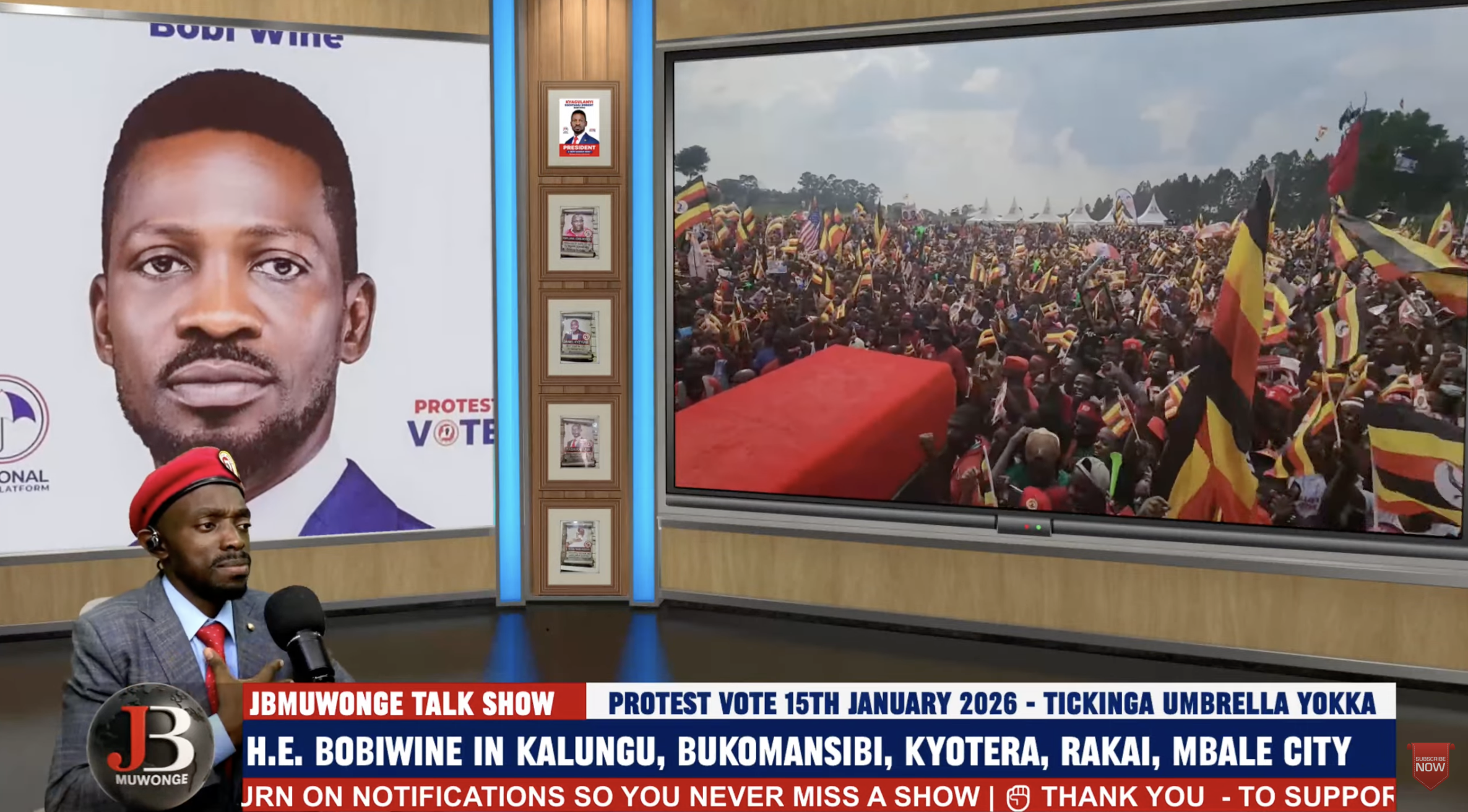
Uganda is walking into another election with the same central question it has carried for nearly four decades: can power change hands through the ballot when the incumbent state has fused itself to the security apparatus, the public square, and the rules of political life?
On 15 January 2026, Ugandans are scheduled to vote for president and parliament.
If President Yoweri Museveni, who has ruled since 1986, wins again, his tenure will push toward half a century, made legally possible through constitutional changes that removed term limits and age limits.
Against him stands the most enduring and emotionally resonant challenger the regime has faced in years: Hon. Robert Kyagulanyi Ssentamu, known as Bobi Wine, whose campaign is less a conventional race than a rolling confrontation between citizen power and state power.
The arc of his presidential bids under a long incumbency
Bobi Wine’s political rise, once a rapper who gave Uganda a voice, now a leader who dared to give it a choice, is inseparable from the generational reality of Uganda: a country where huge numbers of citizens have known only one presidency. This is more than a statistic – it is a lived political psychology. You can feel it in the urgency of his movement’s slogan, People Power, and in the way his rallies look like civic awakenings rather than party events.
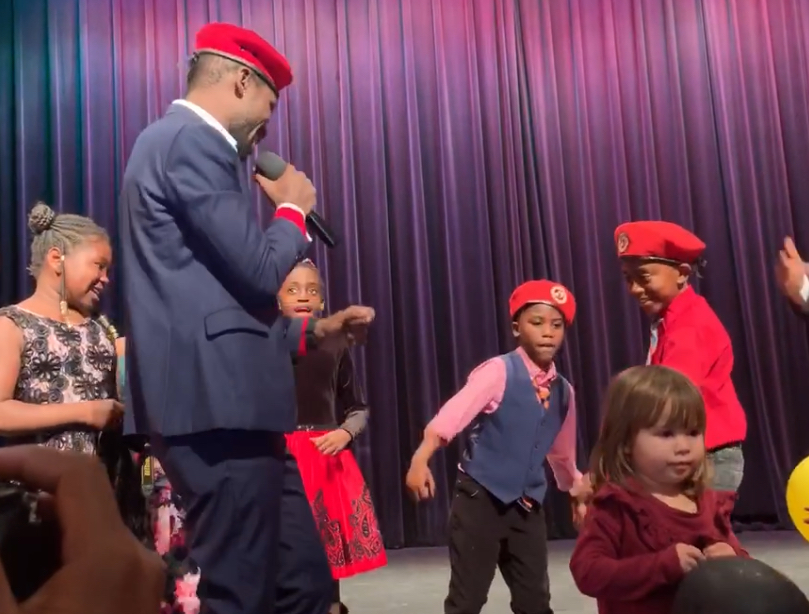
I saw this spirit up close in 2019, in a modest gathering with Bobi Wine and his supporters, where dancing and children’s songs were as central to the moment as the political exchange itself.* (See Video I took below)
Bobi Wine emerged as Museveni’s main challenger, rejecting the declared results in 2021, and citing intimidation and irregularities. Through social media – this became obvious to a world that chose to turn its back – as every moment of oppression was recorded on social media in real time, including the attacks on journalists trying to cover the mayhem.
His re-entry for 2026 is so much more than mere, “running again.” It is insisting, against repeated violent intimidation, that the right to compete for power is not a privilege granted by the state, but a right held by citizens. (That is why the campaign often feels like a referendum on whether elections remain meaningful at all.)
2) Arrests, violence, and the deliberate choreography of fear
The pattern of force used against Bobi Wine is not new, it has a documented deep record. One of the most notable early flashpoints is the 2018 Arua incident, after which he was arrested and appeared with visible injuries; Amnesty International reported “signs of torture” and called for investigation.
That episode established what the country would see again and again: the state’s willingness to use detention, charging strategies, and physical coercion to punish, and to signal to supporters, journalists, and other politicians that dissent in the brutal M7 regime would be costly.
Fast forward to the current election period: Reuters reported that the National Unity Platform (NUP) says more than 300 of its supporters and officials were detained since the campaign period began, amid dispersals involving tear gas, water cannon, and beatings captured on video.
The pretense is “security management, ” while in truth it functions as election engineering: Giving the world and the people the perception of Democracy while orchestrating thinning crowds, disrupting coordination, exhausting volunteers, creating terror, while shrinking the space for legitimate political assembly.
Bobi Wine’s persecution as a mirror of Uganda’s wider repression
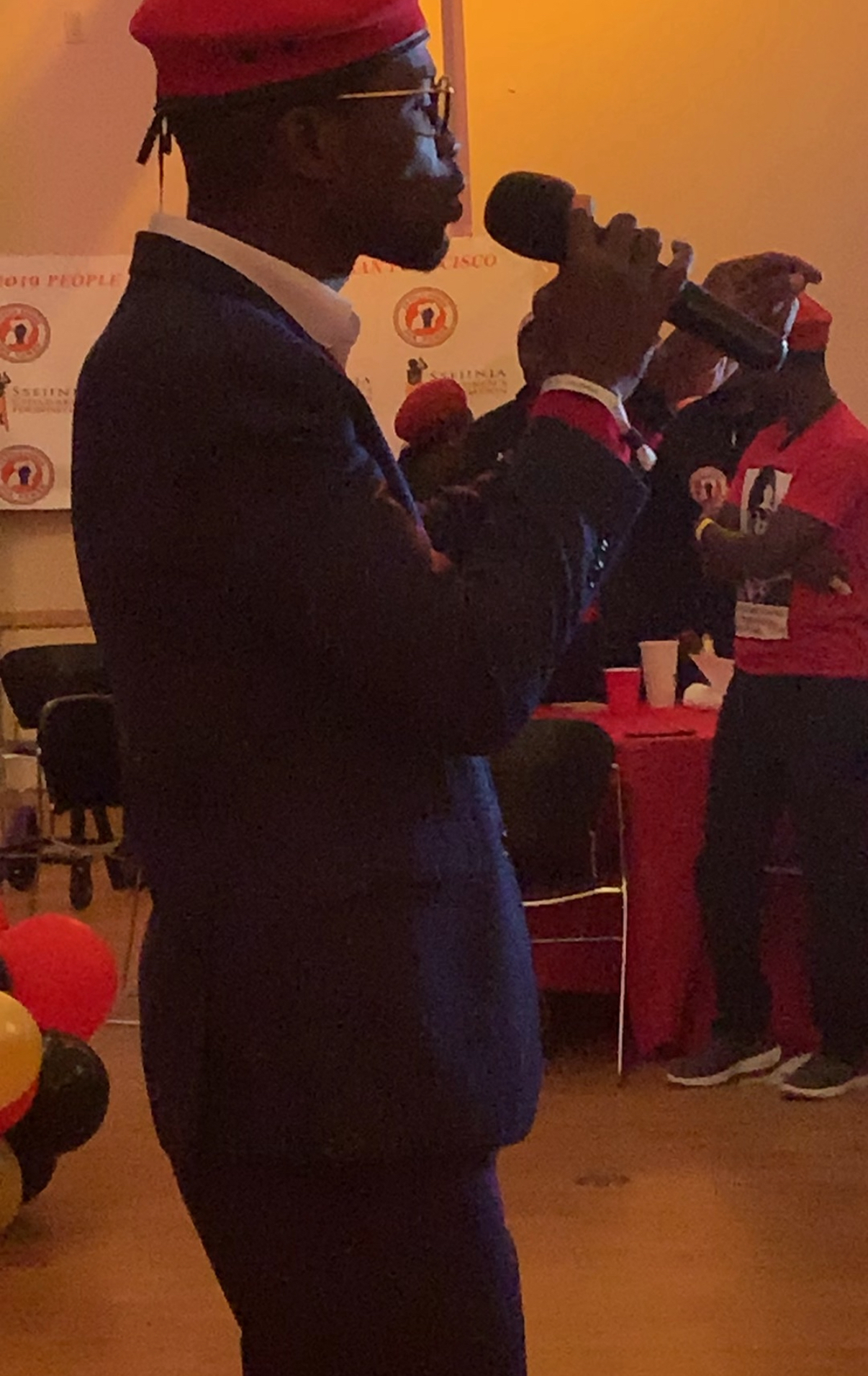
Bobi Wine embodies a point that bigger than one man. While he is the best-known and most public target, the logic of repression spreads outward: from candidate, to party, to civic groups, to journalists, to ordinary citizens – who show up, noting many more would be supporters may fearfully stay at home.
Human rights organizations documented severe election-period abuses around 2021 violence, arbitrary arrests, and the use of security forces to constrain opposition activity.
Freedom House has also documented major restrictions on internet connectivity and social media around that period part of a broader effort to control narrative, organizing, and documentation.
So when Bobi Wine is stopped on a road, as we saw happen yesterday, the day before, and again today, trying to reach his campaign sites, the message is not only “you can’t pass.” It’s much more: “politics belongs to Museveni.” When supporters are rounded up, the message is not only “you are detained.” It’s a Museveni proclamation that asserts: “your participation has consequences – fear me – I am the Forever President.”
What Bobi represents: a “New Uganda” promise, not just a candidacy
“Bobi Wine’s appeal is not only symbolic—drawing on youth, urban working-class energy, and cultural credibility—but also programmatic. Though in his forties, he confronts a president in his eighties who, in a historical irony, first assumed power when he himself was of comparable age.”
NUP’s 2026–2031 manifesto (“A New Uganda Now”) frames its pitch as a reset: restoring political freedoms and constitutionalism, confronting corruption and waste, and pursuing jobs and service delivery at scale.
Ugandan press coverage of the manifesto highlights headline promises like large-scale job creation alongside anti-corruption and governance reforms.
In a society where patronage politics can make citizens feel small, Bobi’s message is psychologically disruptive: it tells ordinary people they are not beggars at the gates of power, they are the owners of their state.
The Museveni regime – A human rights horror:
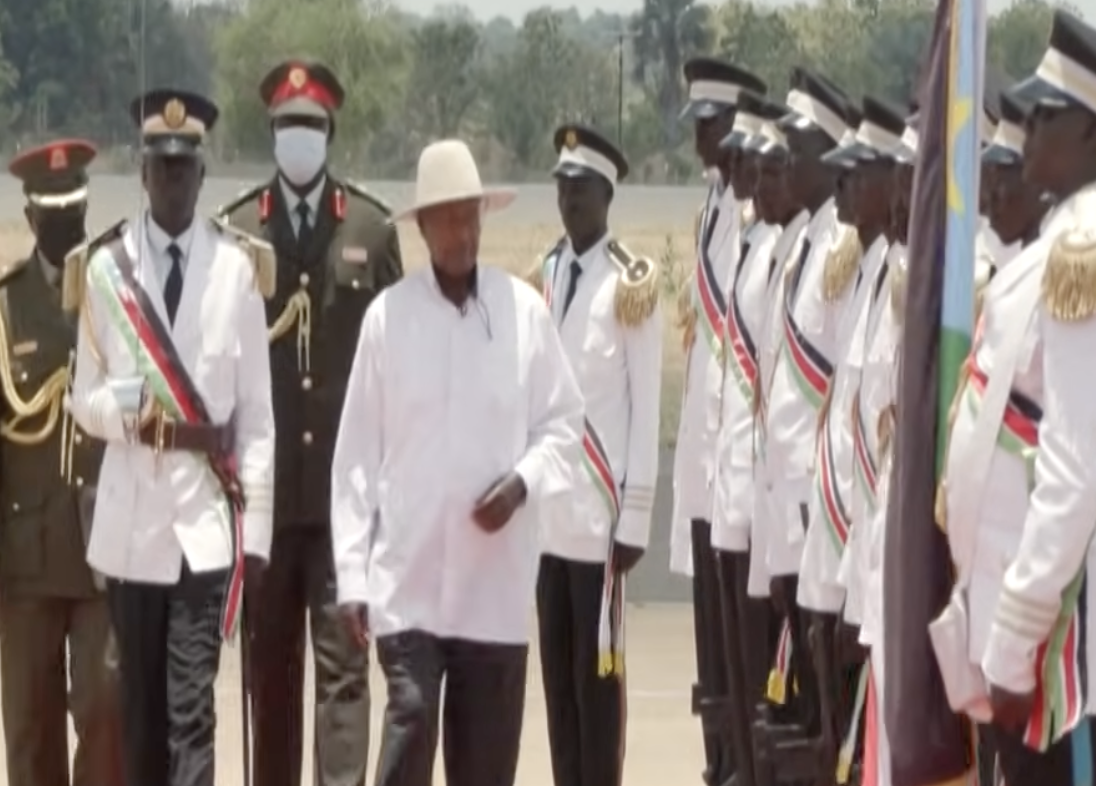 Under President Museveni’s more than four decades in power, Uganda’s human-rights record has been defined by entrenched repression, most notoriously through the use of illegal detention and torture facilities—often referred to by survivors and rights groups as “safe houses.” Independent reporting by Amnesty International, Human Rights Watch, and UN mechanisms has documented patterns of arbitrary arrest, incommunicado detention, beatings, electric shocks, stress positions, sexual violence, and psychological torture carried out by security and military intelligence units operating beyond judicial oversight. These abuses have been deployed disproportionately against political opponents, journalists, protesters, and activists, particularly during election cycles, with near-total impunity. This climate of coercion has been further entrenched by the enactment of Uganda’s Anti-Homosexuality Act in 2023, which codified severe criminal penalties and legitimized state and vigilante violence against LGBTQI+ people, deepening fear, encouraging denunciation, and expanding the reach of abusive enforcement practices. Together, the persistence of torture houses and the AHA 2023 illustrate how legal repression and extrajudicial violence function in tandem under Museveni’s rule to silence dissent and police identity, despite Uganda’s constitutional guarantees and binding international obligations prohibiting torture and discrimination.
The current tactics: how incumbency campaigns when it controls the ground
Museveni does not campaign only through speeches and posters. He campaigns through structures: security deployments, administrative permissions, selective law enforcement, and the ability to define what counts as “order.”
Across the current campaign trail, familiar methods recur: Roadblocks and route interference that force rerouting, delays, or cancellation. Tear gas deployed for no reason at peaceful rallies and crowd dispersals that breaks momentum and creates panic. Targeted arrests of coordinators, aides, and local mobilizers (the spine of any campaign) even if Parliamentarians themselves. Narrative warfare: portraying opposition crowds as “illegal processions” or threats to public order.
Recent, examples are abundant. Al Jazeera published footage of police using tear gas to disperse crowds at a Bobi Wine campaign event in Kampala. Bobi Wine publishes his own daily log of these offenses on his social media accounts, in real time.
Ugandan broadcaster NTV reported roadblocks and tear gas disrupting his Arua campaign trail, including him proceeding on foot after police blocked the road.
Reuters documented mass detentions claimed by NUP and the use of dispersal tactics, alongside allegations and denials typical of this cycle. This is what “blocking campaigning” looks like in practice not one single dramatic ban, but relentless, grinding obstruction: campaign attrition which is bled dry not by a single decisive blow, but by relentless, coordinated administrative fire.
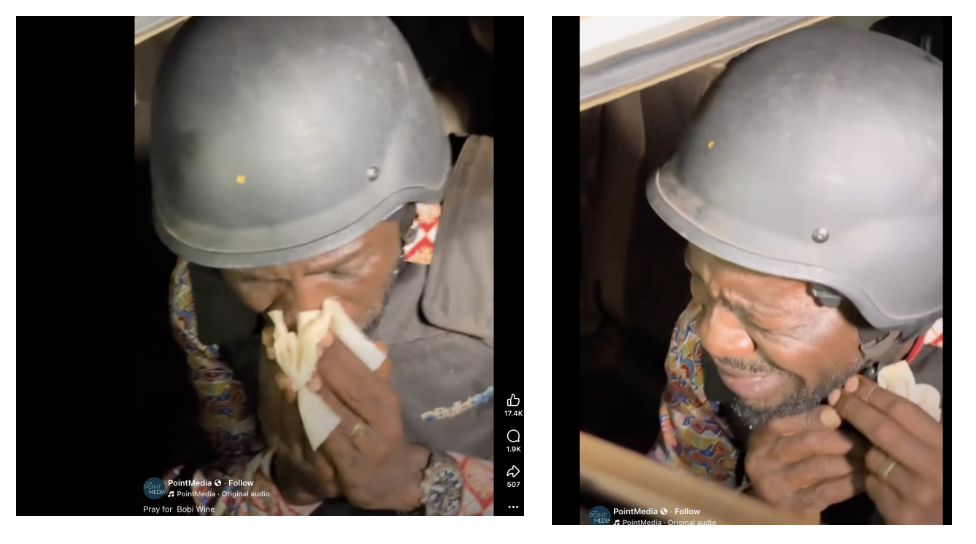 By simply watching Bobi Wine’s own social-media videos, recorded in real time, one can see the strain etched onto his face after tear-gas attacks, hear the coughing and panic as crowds scatter, and feel the cumulative exhaustion of a campaign conducted under siege.
He moves through public spaces wearing a bulletproof vest and military helmet, not as political theater but as a matter of survival. In those moments, the question hanging over every step is unspoken yet unmistakable: What next? Instead of focus on policy the question becomes what new form of force, interruption, or danger awaits simply for daring to campaign – to appear before supporters.
The crowds he draws—and why that matters
In Uganda, crowds are evidence, evidence that fear is failing. That people are tired of the old order. The Museveni repression at election time reminds of the Museveni repression all the time.
Large turnouts around Bobi Wine carry two meanings at once: a popular desire for change, and a direct challenge to the regime’s preferred narrative that only the ruling party embodies stability and legitimacy. That is why crowd control becomes political control, and why the state responds so aggressively to “mere gatherings.” But ultimately must be seen as Museveni’s tight reign on his dictatorship. One he ensured through constitutional changes, such as raising the age limit.
“A Mandela-Like” Courage, moral clarity, and the limits of comparison
Bobi Wine is not Mandela in historical circumstance or organizational structure. But he echoes a Mandela-like quality: the refusal to be psychologically conquered; the willingness to keep returning to the public square after beatings, detentions, threats, and humiliation; the insistence that dignity belongs to the governed, not the governor.
The moral trajectory is what counts: authoritarian systems rely on citizens internalizing permanence. When a figure keeps standing visibly, repeatedly, he breaks the spell of inevitability. That is why regimes try to break such figures in public.
This moment calls for absolute unconditional resolve. To Ugandans watching, marching, singing, and enduring: stay the course. History shows that authoritarian power endures not because it is strong, but because it convinces people that resistance is futile. That illusion is breaking. Every crowd gathered, every flag waved, every song sung in defiance, every step taken despite fear is proof that hope is vibrant. Bobi Wine’s campaign, while a bid for the highest office, is a reminder that rights and dignity cannot be permanently suppressed.
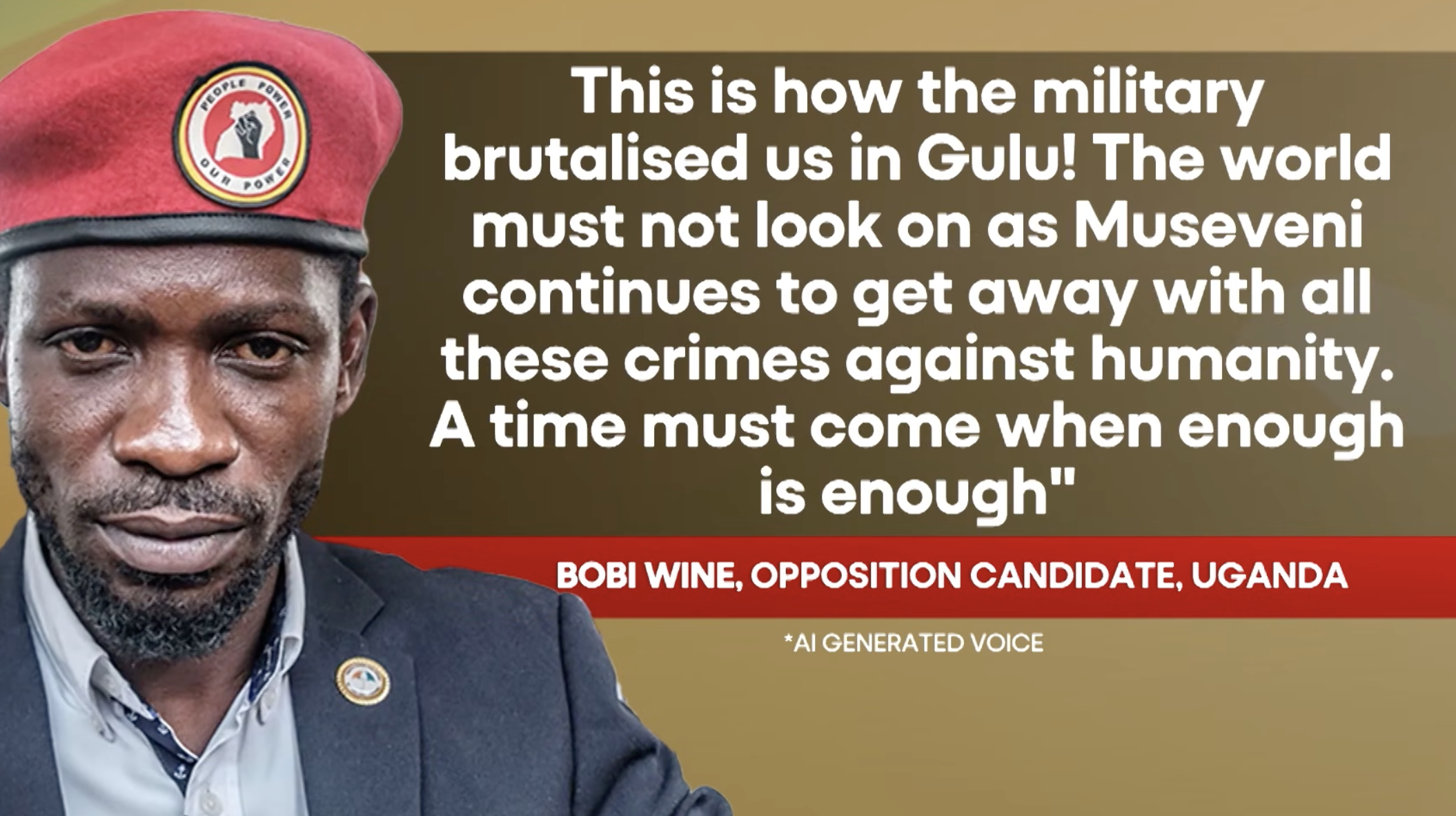
The international community must watch this moment with seriousness and consequence. Uganda stands at a crossroads where the credibility of elections, the right to political participation, and the safety of civilians are being tested in full public view. Silence now would not be neutrality—it would be acquiescence. What unfolds here will signal whether the world still believes that ballots matter more than batons, and that the courage of ordinary citizens deserves protection, not abandonment.
This is also a moment that calls on voices beyond Uganda’s borders, especially those who carry Uganda in their history and identity. Figures such as Zohran Mamdani, a Ugandan dual citizen and, within 2 days, the Mayor of New York, are uniquely positioned to speak with credibility and urgency. The struggle unfolding in Uganda is not abstract; it is a real-time assault on democratic participation after more than forty years of uninterrupted rule.
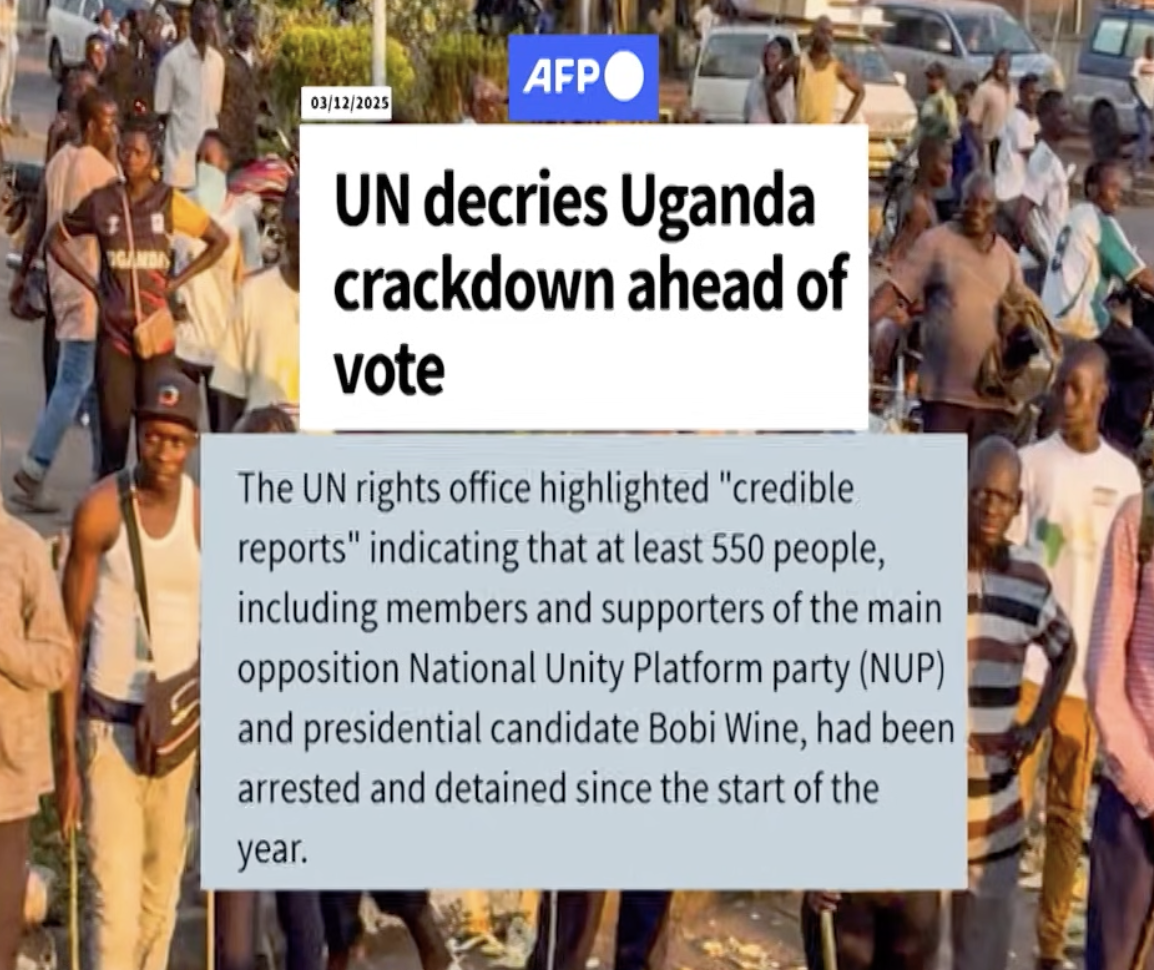
When leaders in global cities – cities that claim moral leadership on democracy and human rights – speak out, it signals that Uganda’s future is not invisible, and that repression carried out in plain sight will not go unremarked. Silence from the diaspora and from international democratic leaders only emboldens authoritarianism. Speaking out, by contrast, affirms to Ugandans on the ground that their courage is seen, their votes matter, and that the world is still watching.
- In case you do not understand the relevance of Mamdani – here is more: (UGANDA BEAMS WITH PRIDE AT MAMDANI WIN: https://www.youtube.com/watch?v=ZTxcIB5NZAc)
Bobi Wine Video:

By Melanie Nathan
Human Rights Advocate
Country Conditions Expert for African Countries, including Uganda.
commissionermnathan@gmail.com
 O-blog-dee-o-blog-da