By Melanie Nathan, September 07, 2025.
In a City on Edge, Only One Candidate Confronts Hate with Unflinching Clarity … See the Jews Guide to Voting for NYC Mayor at the end.
In a city as kaleidoscopic and politically combustible as New York, the mayoral showdown between Andrew Cuomo and Zohran Mamdani transcends electoral rivalry. It’s a referendum on values, integrity, and the very heart and conscience of the Big Apple. For Jewish New Yorkers, the stakes are especially acute — caught between progressive socialist promise of equity and economic inclusion, versus the pressing demand for an uncompromising stand and pursuit of justice against antisemitism. As hate crimes surge, global discourse around Israel fractures, and moral clarity within leftist politics grows increasingly elusive, this race has become more than political theater. It’s a crucible for the soul of the city.
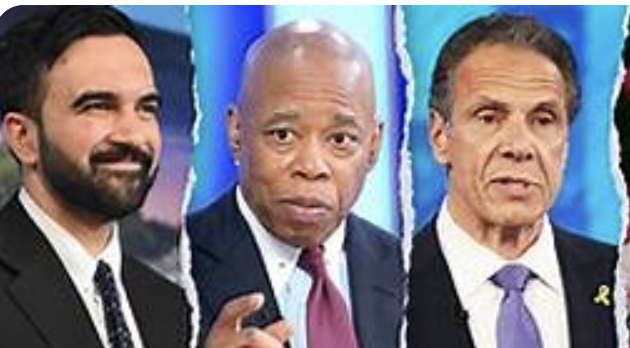
Cuomo’s Moral Clarity vs. Mamdani’s Evasions
Andrew Cuomo’s April 2025 speech at the West Side Institutional Synagogue was imbued with deep purpose and moral clarity. He acknowledged the pain of October 07, condemned the glorification of Hamas and the intimidation of Jews on our streets and campuses. He pledged to hold institutions accountable for spreading disinformation, for biased curricula and campus hate.
This isn’t abstract for me — it’s lived reality. Fear permeates every layer of life, from internal anxiety to public behavior. I’ve received direct antisemitic threats. We already navigate the great City. Once we asked an Uber driver to drop us a block away from Central Synagogue because we were afraid he’d realize he was taking us to temple on Shabbat. We were shaken after he proudly waged an anti-Jewish tirade during the ride, noting how proud he was giving free rides to pro-Palestinian protesters. He was doing something “to help the resistance.”
I’ve seen the slogans —“globalize the intifada”—waved at rallies with no regard for the trauma they evoke. I’ve watched politicians equivocate, parse language, spread falsity, and keep silent. Cuomo didn’t. He stood up and said what needed to be said. Cuomo’s stance is not just reactive—it’s rooted in a belief that Zionism is a subset of liberalism, and that New York, with the largest Jewish population outside Israel, must lead the fight against antisemitism with moral clarity and institutional resolve.
Andrew Cuomo’s record of support for the Jewish community is both personal and political, boasting decades of engagement and policy leadership. As governor, Cuomo was a vocal and consistent ally of Israel, leading multiple solidarity missions during times of conflict, forging joint trade agreements, and working directly with leaders like Shimon Peres and Ehud Barak to strengthen ties between New York and Israel. He made New York the first state to oppose the BDS movement, and followed that with an executive order mandating that any company boycotting Israel would be boycotted by the state in return. Cuomo also prioritized Jewish safety and dignity at home: he secured funding for Jewish institutions’ security, passed some of the nation’s strongest anti-discrimination laws, and stood alone among elected officials at Auschwitz for the 75th anniversary of its liberation.
Mamdani’s Silence and Refusals Speak Volumes
Zohran Mamdani, Cuomo’s opponent, has built his campaign on progressive ideals. Yet when it comes to antisemitism, his record is not just troubling, it is terrifying. He refuses to affirm Israel’s right to exist as a Jewish state. He supports the BDS movement. And he has repeatedly declined to condemn the phrase “globalize the intifada,” offering academic definitions instead of moral clarity.
Mamdani has actively participated in anti-Israel protests and spoken at rallies supporting the BDS movement, including a 2021 event where he criticized elected officials for attending Israel Day parades and declared, “There are three letters that we have as an answer to what is happening in Palestine: B-D-S! B-D-S! B-D-S!”
While Mamdani has stated his commitment to fighting antisemitism, I find his refusal to condemn the phrase “globalize the intifada” profoundly alarming, complicit, and morally indefensible. That phrase, by its very nature, is a call for violent uprising — and in many contexts, it has been used to justify or glorify violence against Jews. If Mamdani cannot acknowledge the harm embedded in such rhetoric, then how can he credibly position himself as someone equipped to combat antisemitism? Fighting hate requires understanding its genesis with unflinching moral clarity, not selective outrage.
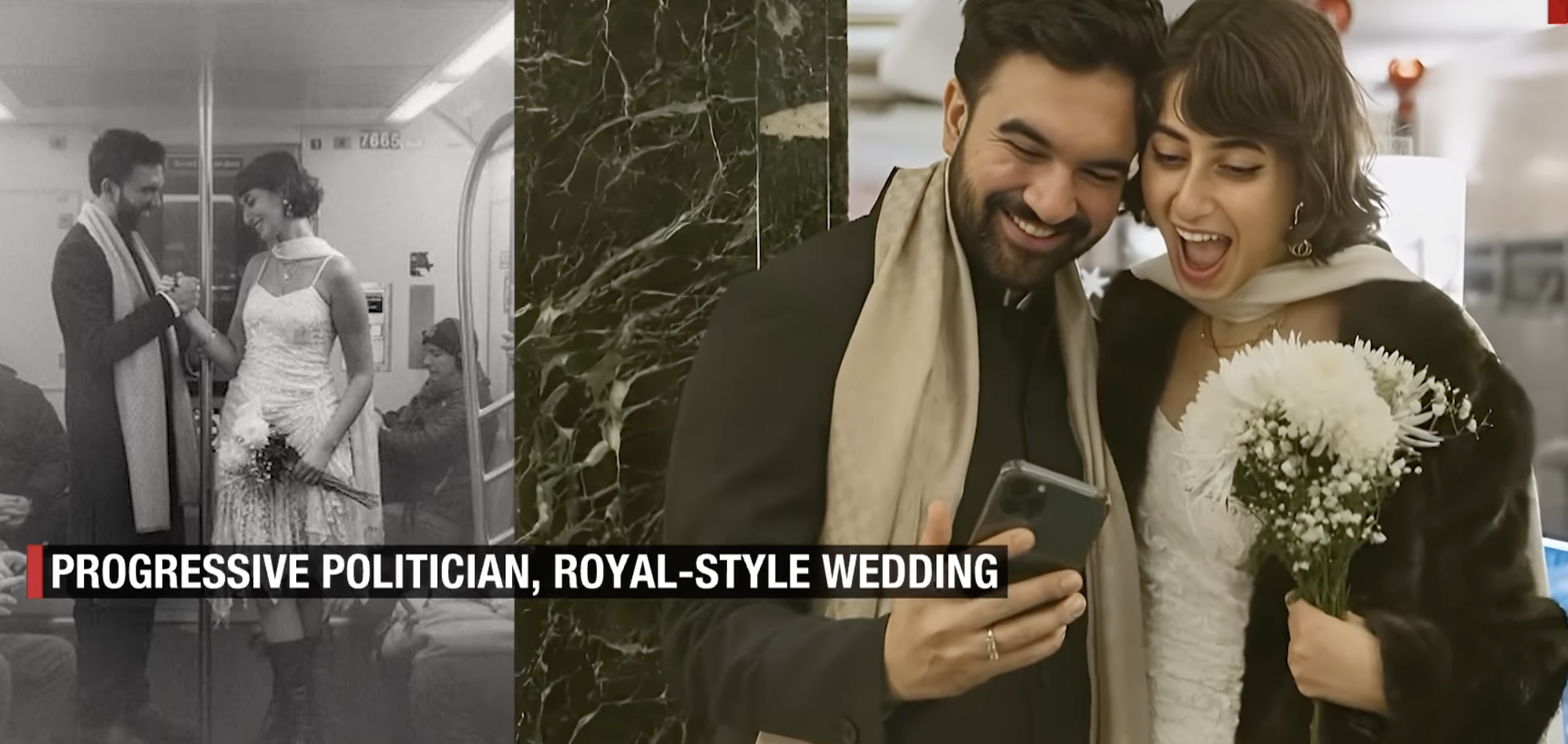
This isn’t just about Jewish voters—it’s about leadership. Mamdani’s evasions reveal a pattern: silence in the face of authoritarianism abroad, hashtag fury in its performative indignation at home, and a refusal to confront uncomfortable truths when they threaten his image. His lavish wedding in Uganda—guarded by state security in a country known for extreme poverty— his silence in failing to condemn Uganda, his family home, for its newly minted “Kill the Gays Bill,” clashes sharply with the values he claims to champion in New York.
The political values he champions in the United States—equity, humility, and solidarity with the marginalized—stand in stark and unsettling contrast to his actions on African soil. The disconnect between his public persona and private behavior is not just troubling—it’s politically and ethically disqualifying.
The Socialist Mirage: What Mamdani’s Jewish supporters reveal in sticking by him is a disturbing tolerance for antisemitism and hostility toward Israel — all in service of ideological loyalty to surface notions of anti-colonialism and the current format for progressive orthodoxy, even when those views are weaponized against their own community. Yet the reality of drilling down, applying critical thinking to the law will reveal that such acquiescence is futile, as Mamdani’s signature issue—rent control—is more fantasy than feasible. His plan for a four-year rent freeze faces legal hurdles, economic risks, and political resistance. The mayor doesn’t control rent policy; the Rent Guidelines Board does. Freezing rents without annual review could be challenged in court. And the economic fallout—especially for small landlords and aging buildings—could be severe.
His broader housing plan, including 200,000 new affordable units and massive public investment, is ambitious but unfunded. It would require billions in new debt and coordination across agencies that have historically failed to meet far smaller goals.
The Bernie Factor: On Saturday, Mamdani stood shoulder to shoulder with Senator Bernie Sanders at a Brooklyn town hall, part of the national “Fighting Oligarchy” tour. That morning, the two marched in New York City’s Labor Day Parade, waving to crowds chanting “Bernie! Bernie!” and posing with union leaders in a show of solidarity with working-class Americans. Yet, back on African soil, a mere month ago, Mamdani’s image shifts dramatically: he hosted a lavish wedding in Uganda, mere blocks from communities grappling with stark, entrenched poverty. By doing so — and by choosing to celebrate under the watchful eye of President Yoweri Museveni’s regime — Mamdani not only flaunted elite privilege but also tacitly endorsed a 40-year dictatorship marked by political repression, cruel human rights abuses, and the systematic erosion of democratic freedoms. The contrast between his public posturing in Brooklyn and his private indulgence in Kampala is as glaring as it is disturbing. Yet this hypocrisy will not tilt the opportunism for this match ‘made in heaven’: a shared popular young enthusiastic leftest base, and a joint passion to decry Israel.
Cuomo and the Women: Let’s be honest: Cuomo’s record is not without serious blemishes. The sexual harassment allegations that led to his resignation were credible and deeply disturbing. I believe the women who came forward. They deserved justice, and they haven’t received it. There is no excuse for what happened, and no rewriting of history can erase the harm they endured.
But I also believe Cuomo has learned from that reckoning. The scrutiny he now faces is intense and unrelenting. In a climate where future harm must be prevented, Cuomo’s awareness of the consequences—and the public’s vigilance—make it unlikely he would repeat those mistakes. This is not forgiveness. It’s a recognition that leadership is about accountability, and that Cuomo, who must surely have now learned, is positioned to lead with the gravity the moment demands.
Why Cuomo Wins the Future: Cuomo is under a microscope. Every move he makes will be watched, dissected, and judged. That scrutiny is not just deserved—it’s necessary. But it also makes future harm impossible to imagine. He knows what’s at stake. He knows what he lost. And I believe he’s learned. I believe the future harm by Cuomo is fully abetted (albeit the past unforgivable) while the future harm by Mamdani is momentous.
This is not a forgiveness op-ed. It’s a reality check. In a climate of rising hate, economic fragility, and ideological confusion, we need a mayor who can govern, who can protect, and who can lead. Cuomo has the experience, the moral clarity on antisemitism, and the political skill to do it.
I believe that New York’s future depends on its responsibility to all its residents. Mamdani is disqualified. I believe Cuomo will apply strict anti-hate and pro women policies —he’s the right choice for this moment.
With this take a look at my score chart on the subjects that emphasize the Jewish perspective.
SCORES for Cuomo, Adams and Mamdani:
Even though Mamdani’s campaign promises are unlikely to be successful, I have still scored him a full 10 on the issue!
He is a sorry loser give the below chart.

Zohran Mamdani’s alleged Ugandan Extravaganza Adds to Political and Ethical Questions
Zohran Mamdani’s alleged Ugandan Extravaganza Adds to the Political and Ethical Questions raised by his failures on Antisemitism:
 O-blog-dee-o-blog-da