The Center for Victims of Torture (CVT) today issued this statement as reports circulate about plans by the Trump administration to fly immigrants to prisons in Libya:
“CVT expresses deep concern about the widely circulated reports that the U.S. has plans to transport immigrants from the U.S. to Libyan prisons via military planes. Human rights groups have registered serious concerns about prisons in Libya. So too has the State Department, last year calling conditions in them ‘life-threatening.’
“No matter what the Trump administration says, torture is illegal. Sending people to places that are known to inflict torture violates the prohibition on non-refoulement, a cornerstone of both U.S. and international law prohibiting people from being sent to a country where they risk being tortured or subjected to other human rights violations.
“While Libya has said it will not accept anyone deported and a federal judge has temporarily blocked this effort until migrants have a chance to challenge their removal, this reported action is part of the administration’s harrowing pattern of its first 100 days. President Trump has been rendering immigrants to notorious detention centers including Guantanamo and CECOT in El Salvador, prisons long reported to use torture in blatant violation of the law.
“The Trump administration continues to destroy the rule of law, lives and communities with its performative efforts to intimidate immigrants as it actively sends people to torture dungeons.” -Yumna Rizvi, CVT senior policy analyst
Melanie Nathan of African Human Rights Coalition said:
The conditions in Libya for any detainee are deplorable. They make El Salvador seem like the Waldorf Astoria.
Human Rights Groups and families are putting Trump, Noem and Rubio on notice that they will be held personally accountable by international tribunals for any crimes against humanity – and sending people into this known cesspool is a flagrant human rights abuse, a crime against humanity. The Trump admin is on notice – torture is illegal and sending people to places that they know inflict torture violates the Convention Against Torture, with refoulement evidence of intent. Non-refoulment is basic law that specifically stops governments from sending people to countries where they are likely to be tortured and subjected to other human rights abuses.
One only has to read the U.S. State Department’s reports from 2016-2023 to be clear that Libya is a torturous and deathly environment for any deportee. In fact even worse if anyone is lGBTQI+. By sending anyone to Libya, Trump, Noem and Rubio would be complicit in torture and all the harms that will be suffered by any detainee sent to that country. This Trump admin is fully aware of the horrors that await these detainees. What could be more evidential of being blatantly complicit in the torture and other horrors, than this reporting from the very Departments of Government which they lead – and I quote directly:
US STATE DEPT REPORT FOR LIBYA, 2023:
Torture and Other Cruel, Inhuman, or Degrading Treatment or Punishment, and Other Related Abuses
The 2011 Constitutional Declaration and postrevolutionary legislation prohibited such practices. The FFM final report documented widespread instances of torture, and cruel, inhuman, or degrading treatment in all prisons it investigated, irrespective of prison location or the entity in control of the detainees.
An unknown number of individuals, including refugees, asylum seekers, and other migrants, were held in facilities under the control of armed groups affiliated with either the government or the LNA, or in extralegal facilities run by smugglers and other nonstate actors. The criminal and nonstate armed groups controlling extralegal facilities routinely tortured and abused detainees, subjecting them to arbitrary killings, rape and sexual violence, beatings, electric shocks, burns, forced labor, and deprivation of food and water, according to dozens of testimonies shared with international aid agencies and human rights groups. In many instances, the purpose of this abuse was reportedly to extort payments from detainees’ families.
In April, Lawyers for Justice in Libya and Libya Crimes Watch documented torture, rape, medical neglect, arbitrary detention, lack of access to family and legal counsel, and other mistreatment inside the al-Kwaifiya prison’s military wing in Benghazi. Witnesses stated that the center’s staff routinely administered severe beatings to detainees and committed harassment and rape. Male detainees testified they often heard screaming coming from the women’s wing. They reported one woman detainee attempted to climb over the detention center wall to commit suicide.
In April, protests erupted in the northwestern city of Zawiya after a video posted to social media purported to show sub-Saharan African mercenaries torturing young Libyan men inside the headquarters of a local unnamed militia. According to local media, the videos showed the apparent mercenaries flogging, burning, and suspending the youths by their limbs from the ceiling.
Impunity was a significant problem in the security forces. The government took limited steps to investigate, prosecute, and punish officials who committed human rights abuses and acts of corruption within its area of reach; however, its limited resources, as well as political considerations, reduced its ability and willingness to prosecute and punish perpetrators.
Prison and Detention Center Conditions
Prisons and detention facilities were often overcrowded, and conditions were harsh and life threatening.
In its final report, the FFM found reasonable grounds to believe the SDF elements in control of Mitiga detention complex in Tripoli committed crimes against humanity, as did the LNA, LNA-aligned Tarek Ben Ziyad (TbZ) Brigade, and ISA East elements in control of Gernada and al-Kwaifiya prisons in Benghazi. According to the FFM, no detainee it interviewed during its three-year mandate had been held in acceptable conditions of detention.
Abusive Physical Conditions: Prisons were grossly overcrowded. The FFM final report found detainees were denied adequate access to water, food, toilets, sanitation, light, exercise, medical care, legal counsel, and communication with family members. Poor and unsafe infrastructure was common and exacerbated sanitation problems, which contributed to the spread of communicable diseases. The ratio of detainees and prisoners to guards varied significantly during the year. Monitoring and training of prison staff by international organizations remained largely suspended, although training of judicial police continued. There was a lack of adequate gender-sensitive training for male guards.
Although there were often separate facilities for men and women, women were almost universally guarded by male prison guards. UNSMIL and international NGOs received numerous reports of women subjected to forced prostitution in prisons or detention facilities in what amounted to sexual slavery.
Communicable diseases, including tuberculosis, scabies, and HIV and AIDS, affected detainees in some prisons and detention centers. Most prisons lacked functioning health units, and inmates depended on family members for medicine. Inmates needing medical attention were sometimes transferred to public hospitals within the jurisdiction of whichever police unit or militia controlled the prison; these transfers often depended on the availability of private vehicles, as most prisons lacked ambulances. In February, a local NGO reported the death of Fathi Mohammed, age 72, Khawaja in SDF-controlled Mitiga prison as a result of illness and deliberate medical neglect throughout his six-year detention.
There were reportedly no functioning juvenile detention facilities in the country.
Administration: There was no credible information available as to whether authorities conducted investigations of credible allegations of mistreatment.
Independent Monitoring: Multiple independent monitoring organizations reported difficulties gaining access to prison and detention facilities, particularly those administered by the LNA. The government permitted limited, chaperoned independent monitoring of its detention facilities by international organizations, including the International Committee of the Red Cross, but controlled these movements tightly. UN and international aid organization sources reported DCIM officials repeatedly denied access requests. Although some international organizations received permission to visit DCIM-administered migrant detention facilities, the responsiveness of government authorities and level of access varied widely from visit to visit. As of October, the United Nations High Commissioner for Refugees (UNHCR) and its partners had conducted 486 monitoring visits to DCIM facilities during the year to administer aid and register refugees and asylum seekers.
THIS WAS the 2018 REPORT from during the trump Admin:
Prison and Detention Center Conditions
Prisons and detention facilities are often overcrowded, harsh, and life threatening, falling well short of international standards. Many prisons and detention centers were outside government control see section 1.g.).
According to the International Organization for Migration (IOM) and the Office of the UN High Commissioner for Refugees (UNHCR), migrant detention centers, operated by the GNA Ministry of Interior’s Department to Combat Irregular Migration, also suffered from massive overcrowding, extremely poor sanitation conditions, lack of access to medical care, and significant disregard for the protection of the detainees. According to press reports, detainees experienced discrimination on the basis of their religion. IOM did not, however, receive complaints during the year about migrants prevented from engaging in religious observances while detained.
Physical Conditions: In the absence of an effective judicial system or release of prisoners, overcrowding and limited access to health care reportedly continued during the year. Many prison facilities need infrastructural repairs. Accurate numbers of those incarcerated, including a breakdown by holding agency, were not available.
Detention conditions were sometimes substantially different for types of detainees; according to reports by the NCHRL, ISIS detainees and other terrorist suspects were detained in less crowded conditions due to security concerns.
A large number of detainees were foreigners, mostly migrants. Facilities that held irregular migrants generally were of poorer quality than other facilities. The Libyan Young Lawyer’s Association (LYLA) reported poor conditions at the government detention center in Zawiya. According to UNHCR, as of September, there were between 8,000 and 9,000 migrants and refugees housed in the 20 active official detention center’s run by the GNA’s Department for Combatting Irregular Migration (Ministry of Interior), down from 20,000 in late 2017. A large number of additional migrant detainees were reportedly held in nongovernment centers, although numbers were unknown. Officials, local militias, and criminal gangs moved migrants through a network of detention centers with little monitoring by the government or international organizations.
There were reportedly no functioning juvenile facilities in the country, and authorities held juveniles in adult prisons, although sometimes in separate sections. There were separate facilities for men and women.
There were reports of killings and deaths in detention centers. Due to security conditions that limited monitoring, the exact number of those killed in prisons, jails, pretrial detention, or other detention centers was unknown.
Makeshift detention facilities existed throughout the country. Conditions at these facilities varied widely, but reports indicated the conditions in most were below international standards. Consistent problems included overcrowding, poor ventilation, and the lack of basic necessities.
Administration: The Judicial Police Authority, tasked by the GNA Ministry of Justice to run the prison system, operates from its headquarters in Tripoli. It remained administratively split, however, with a second headquarters in al-Bayda that reports to a separate, rival, eastern Ministry of Justice that provides oversight to prisons in eastern Libya and Zintan. During the year the ratio of detainees and prisoners to guards varied significantly. Monitoring and training of prison staff by international organizations remained largely suspended, although training of judicial police continued during the year.
Independent Monitoring: The GNA permitted some independent monitoring and permitted IOM and UNHCR increased access to transit facilities. Nevertheless, the lack of clarity regarding who ran each facility and the sheer number of facilities made it impossible to gain a comprehensive view of the system.
Reports also questioned the capability and professionalism of local human rights organizations charged with overseeing prisons and detention centers.
Due to the volatile security situation, few international organizations were present in the country monitoring human rights. UNSMIL monitored the situation through local human rights defenders, members of the judiciary, and judicial police. The absence of a sustained international presence on the ground made oversight problematic; however, UNSMIL relocated most of its staff to Tripoli by the end of the year to engage in more effective monitoring of Libyan human rights developments. The International Committee for the Red Cross (ICRC) did undertake efforts to monitor conditions of detention facilities.
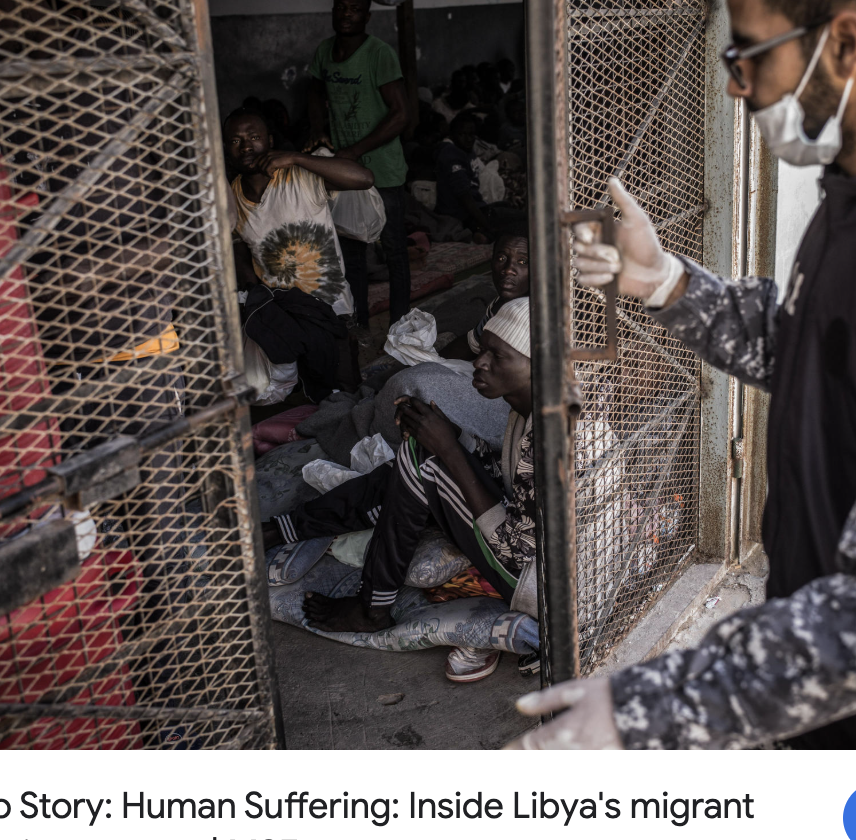
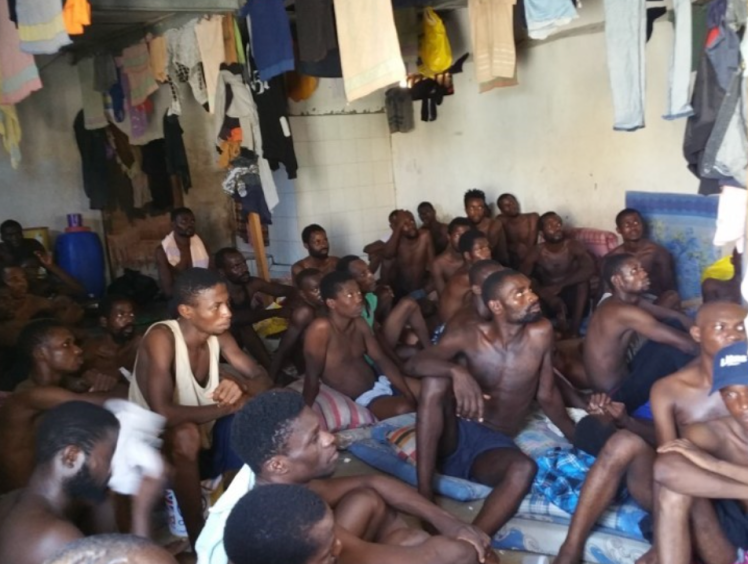
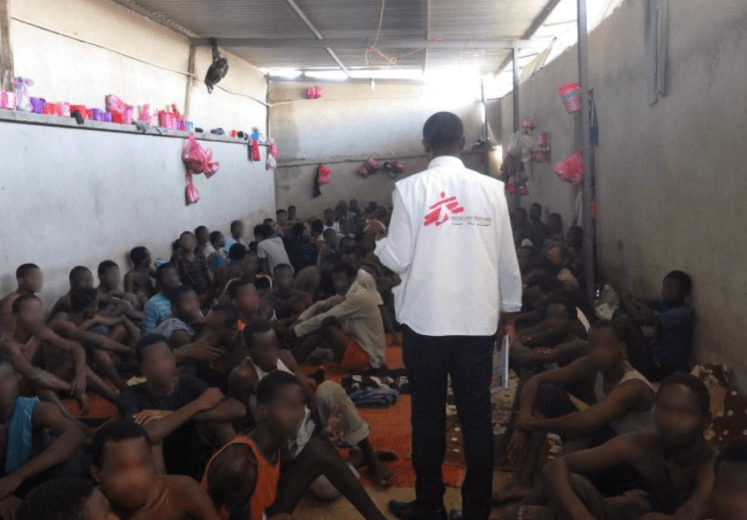
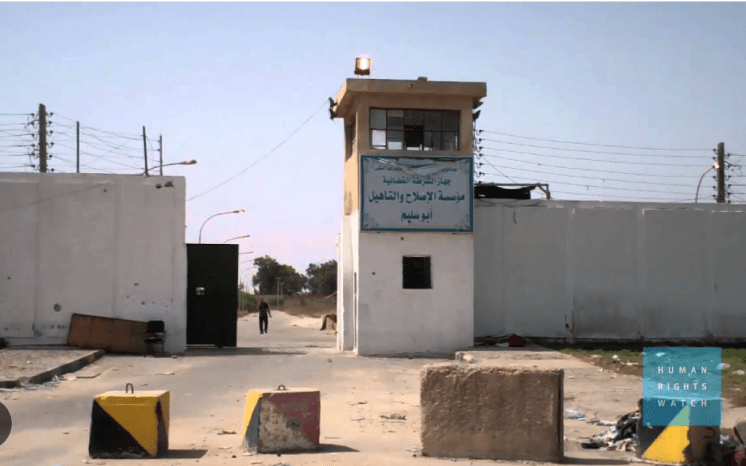
THE PICTURES SPEAK FOR THEMSELVES – THIS INHUMANITY AT ITS WORST


 O-blog-dee-o-blog-da